Kalka, Panchkula: My Spiritual Tour
I had a dream one early morning in September 2025. My late mother and the two cousins who had accompanied me to Haridwar previous month were helping me board the Kalka Express with my suitcase.
The message was unmistakable: I was being asked to travel to Kalka—on the Kalka Express—and to make that journey entirely on my own.
I had heard of Kalka, but I neither knew where it was nor understood why my dream was directing me there.
When I looked it up, I discovered that Kalka is in Panchkula, Haryana, and is known for the Kalka Mata Mandir—a temple dedicated to a fierce and powerful form of Ma Kaali. Since my mother was an ardent devotee of Ma Kaali, it was no surprise that she appeared in my dream to convey her wish.
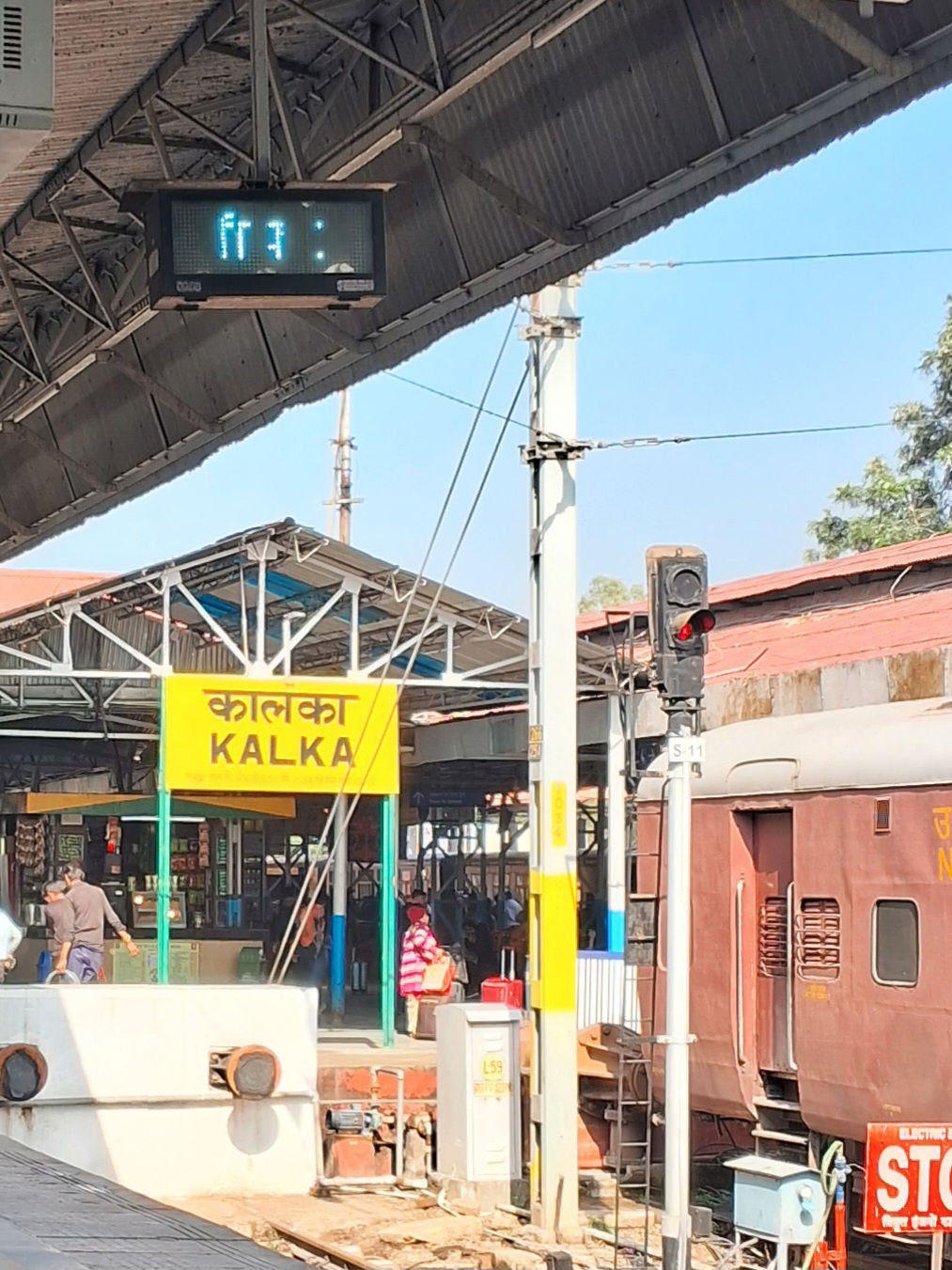
I had never travelled alone outside Delhi by train before; I was always accompanied by family. I didn’t even know how to book a train ticket, and a quiet hesitation lingered within me.
I wasn’t financially strong at the time and needed to arrange money for the trip. So I chose January 2026 as the month when I would finally travel to Kalka.
Then, almost miraculously, a friend offered me a work‑from‑home role in November. I joined in December as the Head of Operations, earning a comfortable salary.
I received my first salary in January 2026, and with that, I began planning my solo journey to the Kalka Mata Mandir in Kalka, Panchkula—this time determined to travel by the Shatabdi Kalka Express.
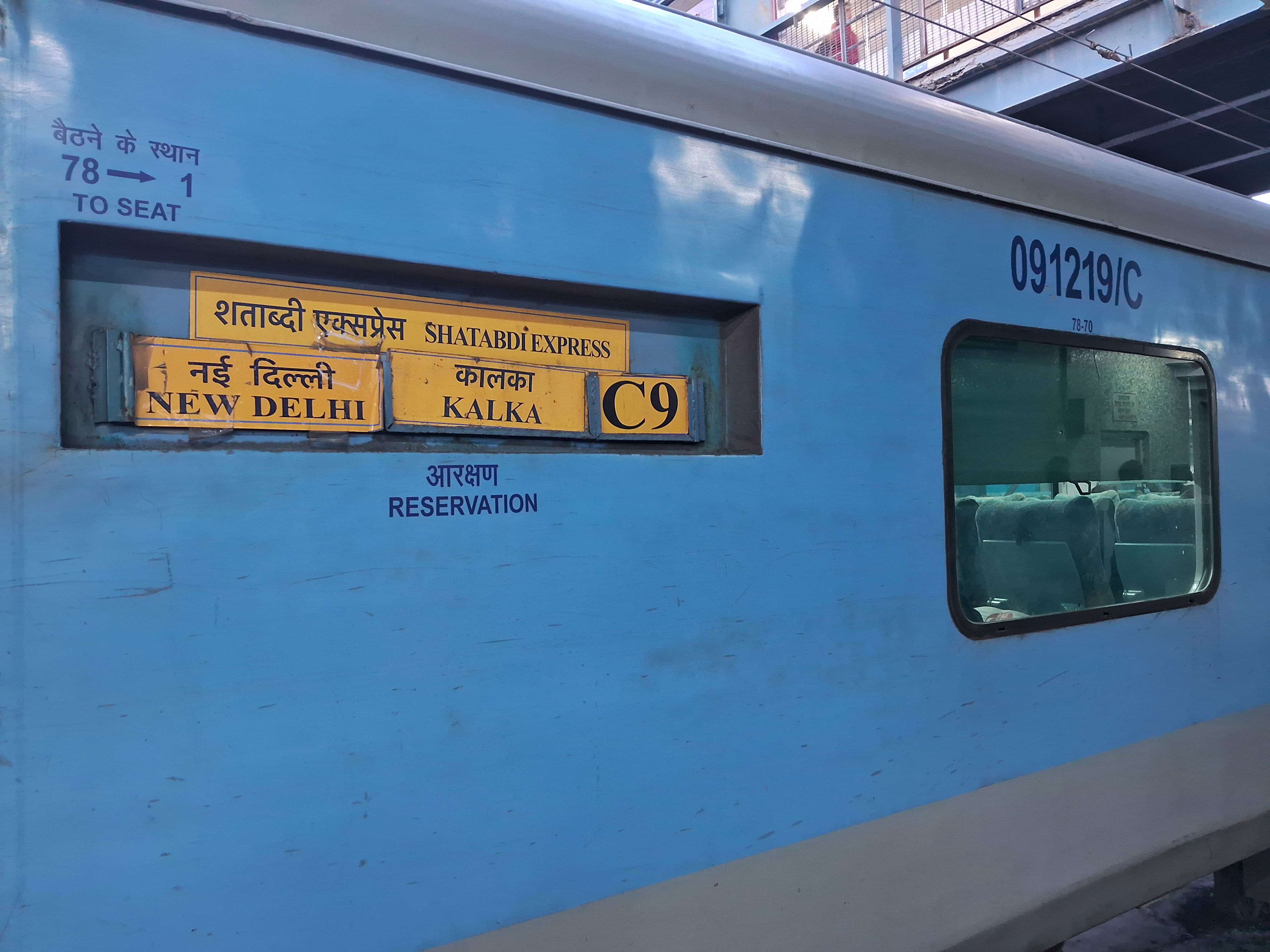
I had already done my online research—about the Kalka Mata Mandir, how to book a Kalka Shatabdi Express ticket on the IRCTC website, how to check the platform number using the NTES app, and even how to reach the temple after arriving in Kalka. I wanted to be fully prepared.
I also explored the major tourist attractions in Kalka where I could spend some time before boarding my return Kalka Shatabdi Express in the evening.
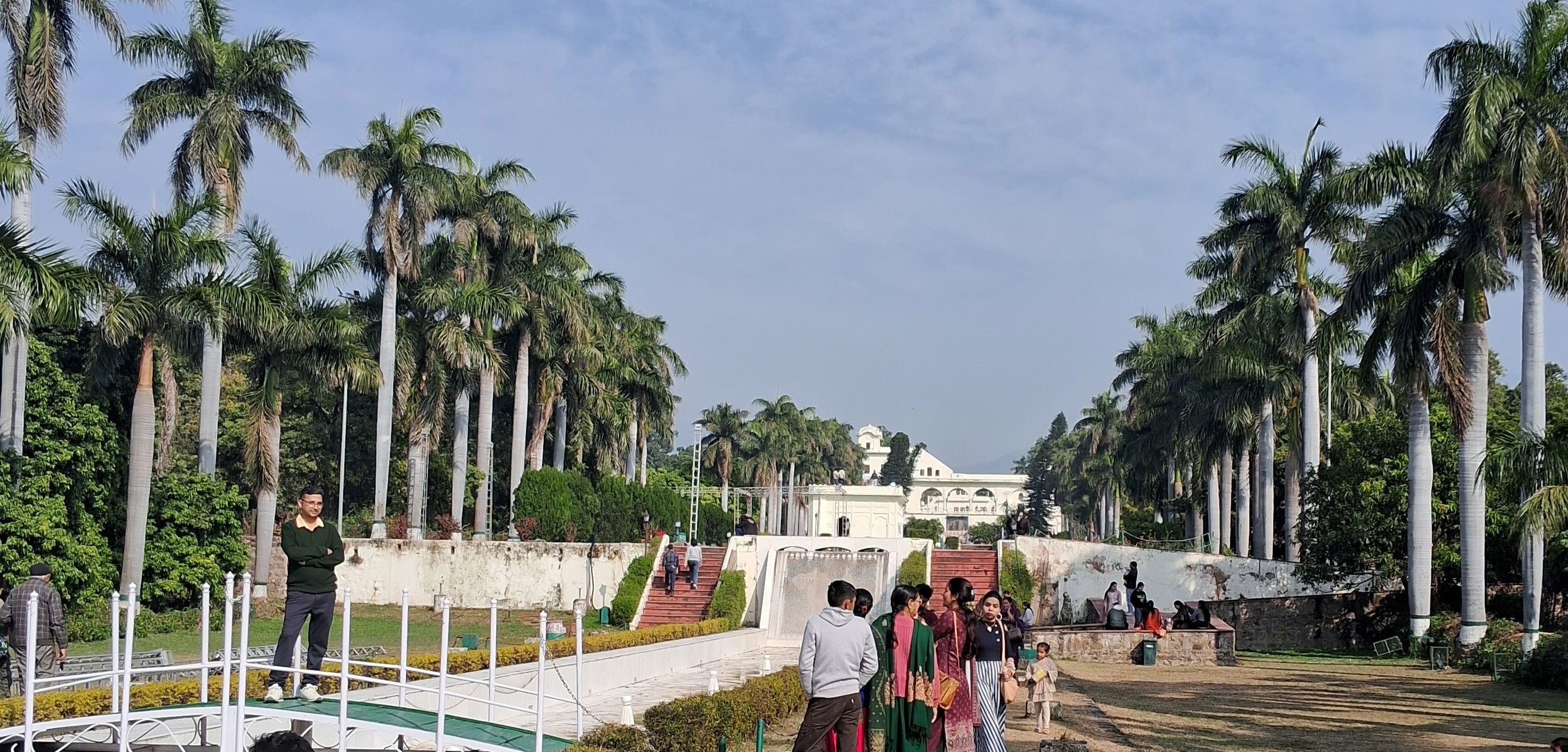
I finally decided to spend my free time at Pinjore Garden, also known as Yadvindra Garden.
On 18th January, I successfully booked two tickets—CC class for my journey from Delhi to Kalka, and EC class for my return from Kalka to Delhi.
I chose EC class for my return journey for two reasons: I wanted to experience EC class for the first time, and I also wanted a more comfortable ride for the night journey back.
I looked up the differences between the two classes, and I was genuinely amazed by how much I learned.
I also decided to offer ₹1001 at the Kalka temple from my very first salary—something meaningful and completely new for me.
I also booked an Uber rental in advance for both the onward and return journeys, just to avoid any last‑minute inconvenience.
Five months earlier, during my two‑day trip to Haridwar, I had travelled with a newly bought Safari trolley suitcase. But since this journey was only for a single day, I decided to leave the suitcase behind and carry a duffle bag instead—one I could wear cross‑body on my shoulder, ensuring I wouldn’t accidentally forget it anywhere.
I booked my tickets for 25th January. The morning train from New Delhi was scheduled for 7:40 a.m., and my return train from Kalka was set for 5:40 p.m.
In the early hours of 25th January, I woke up at 4 a.m. and was ready by 6 after completing my usual hour‑long morning puja. The only thing I had to skip, due to lack of time, was reading the Hanuman Chalisa.
At 6:15 a.m., I boarded the cab that was waiting outside my house. The temperature was quite low, and the cold was becoming sharper by the minute.
I had already checked the NTES mobile app to confirm the platform, and it showed Platform 2.
I reached New Delhi Railway Station around 7 a.m. This was the first time in my life that I was about to board a train all by myself.
I asked a coolie for the direction to Platform 2, and he guided me correctly. To my pleasant surprise, the train was already standing there. I located my coach, clicked a few photos on my phone, and then boarded. Inside, I found my window seat and settled in quickly.
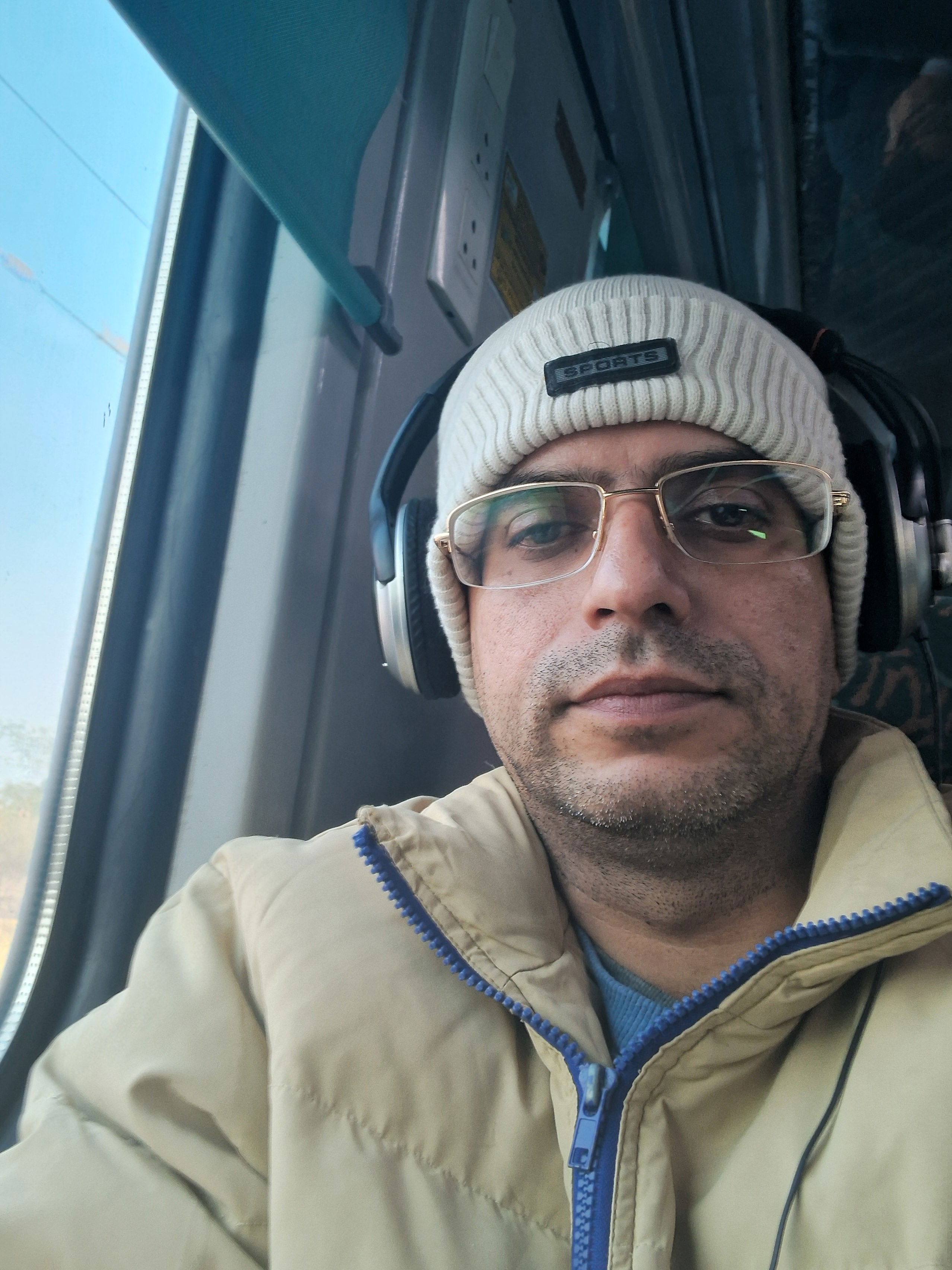
At 7:40 a.m., the train began to move. The route was completely new to me, so having a window seat felt like a real advantage for a daytime journey.
The train passed through North Delhi areas like Narela, Azadpur and Adarsh Nagar. Soon, the scenery began to change—railway stations giving way to rows of parked coaches, washing yards, open fields and farmers at work. I saw farmhouses, children flying kites, youngsters playing cricket, stretches of sugarcane fields, and vibrant patches of sarson ka saag swaying in the breeze.
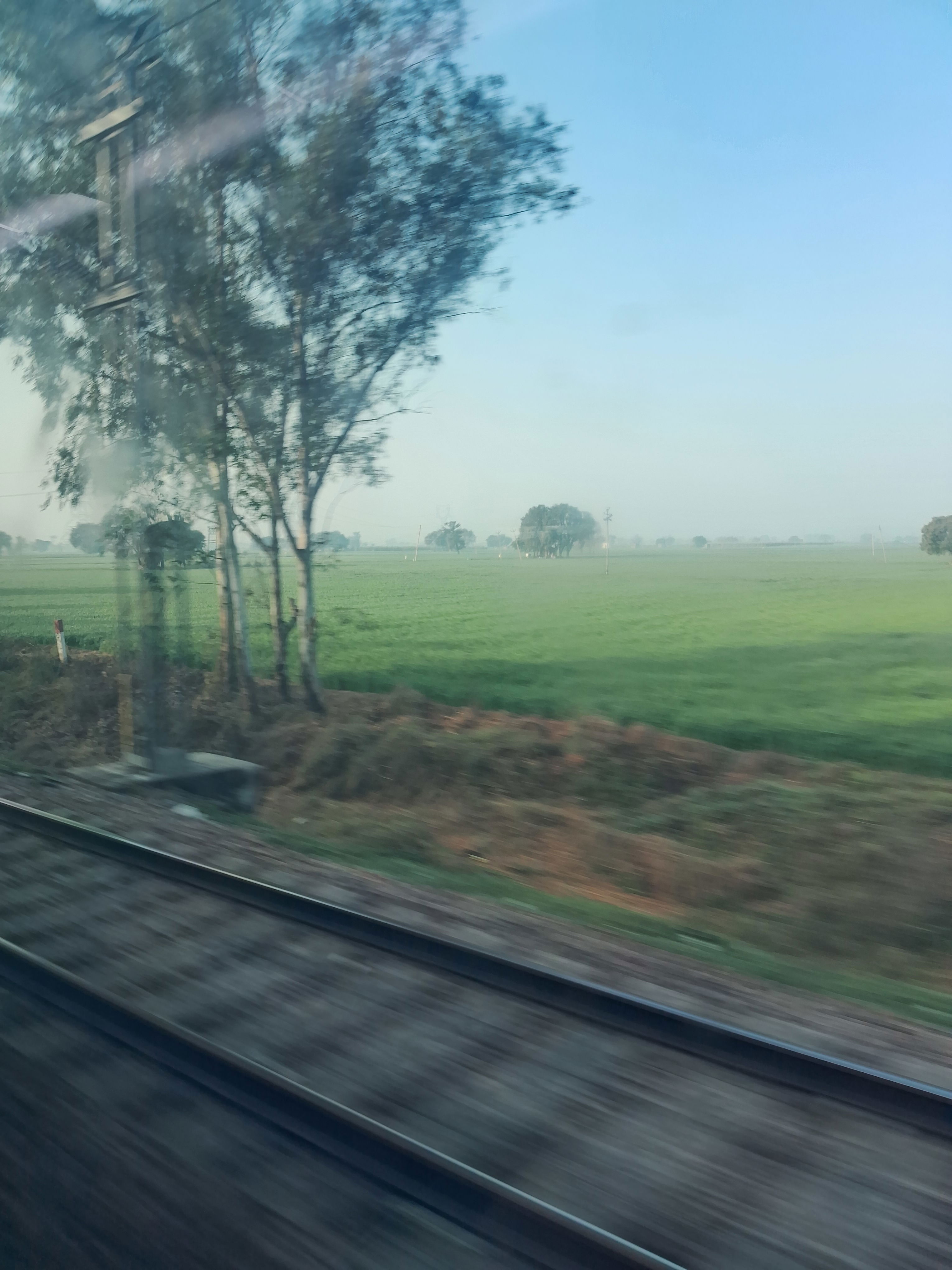
It was a four‑hour journey from New Delhi to Kalka. Inside the train, something amusing was unfolding.
Every time I looked around for the train staff to serve tea and breakfast, they were nowhere to be seen. But the moment I got absorbed in the view outside the window, they appeared. The person in the middle seat was extremely patient—he gently nudged me with his shoulder each time so I wouldn’t miss my meal. I smiled and thanked him, though I felt a little embarrassed too.
First, a small bottle of water was served, followed by the distribution of newspapers. For breakfast, I received tea, juice, brown bread with butter, two veg cutlets, and a mouth freshener.
After finishing my breakfast, I treated myself to another cup of tea. Then I spent the time clicking pictures of the passing scenery from my window. Major stations like Sonipat, Panipat, Kurukshetra, Ambala and Chandigarh came along the way, and I managed to capture photos of most of the stations that appeared on my side.
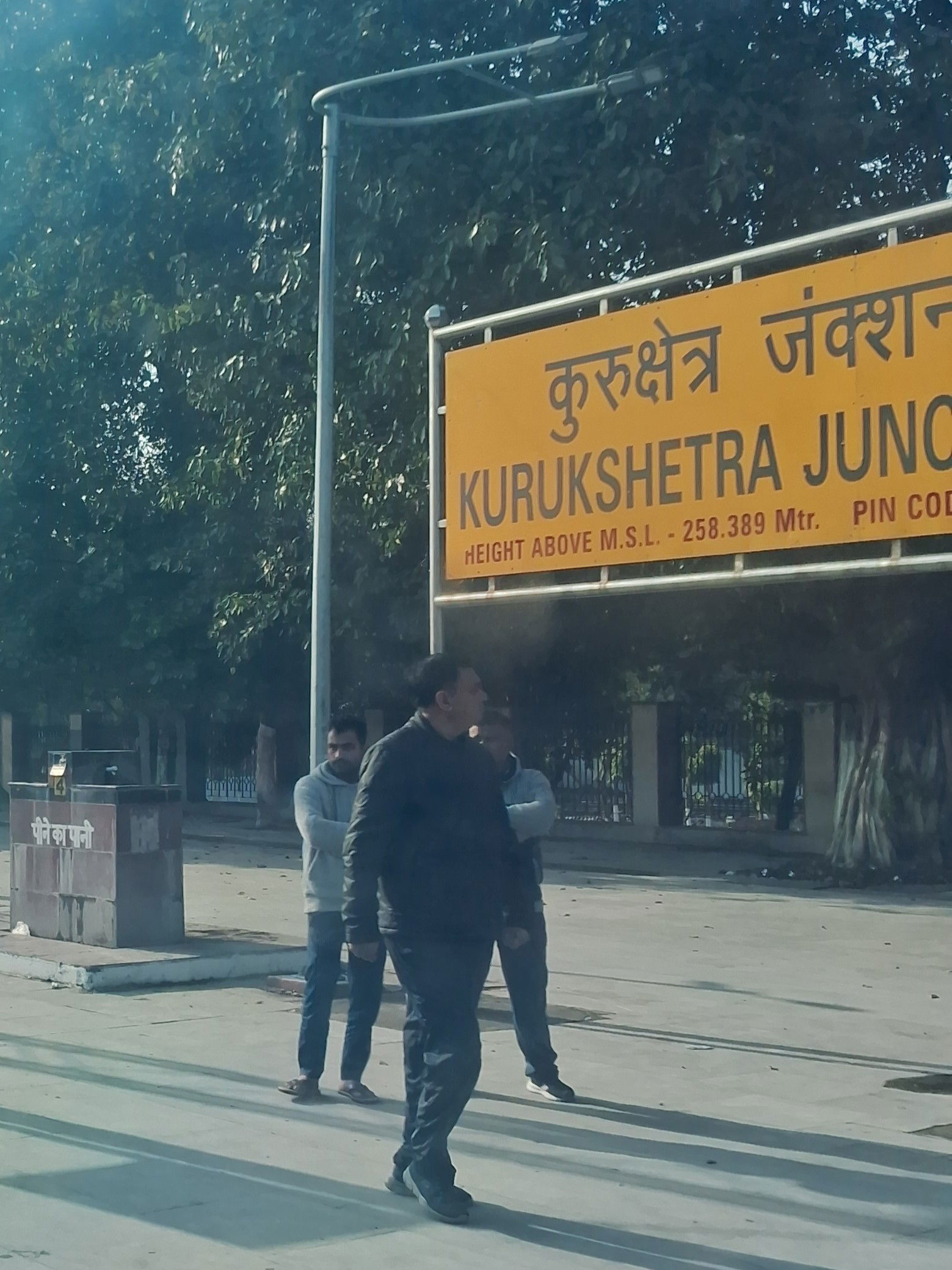
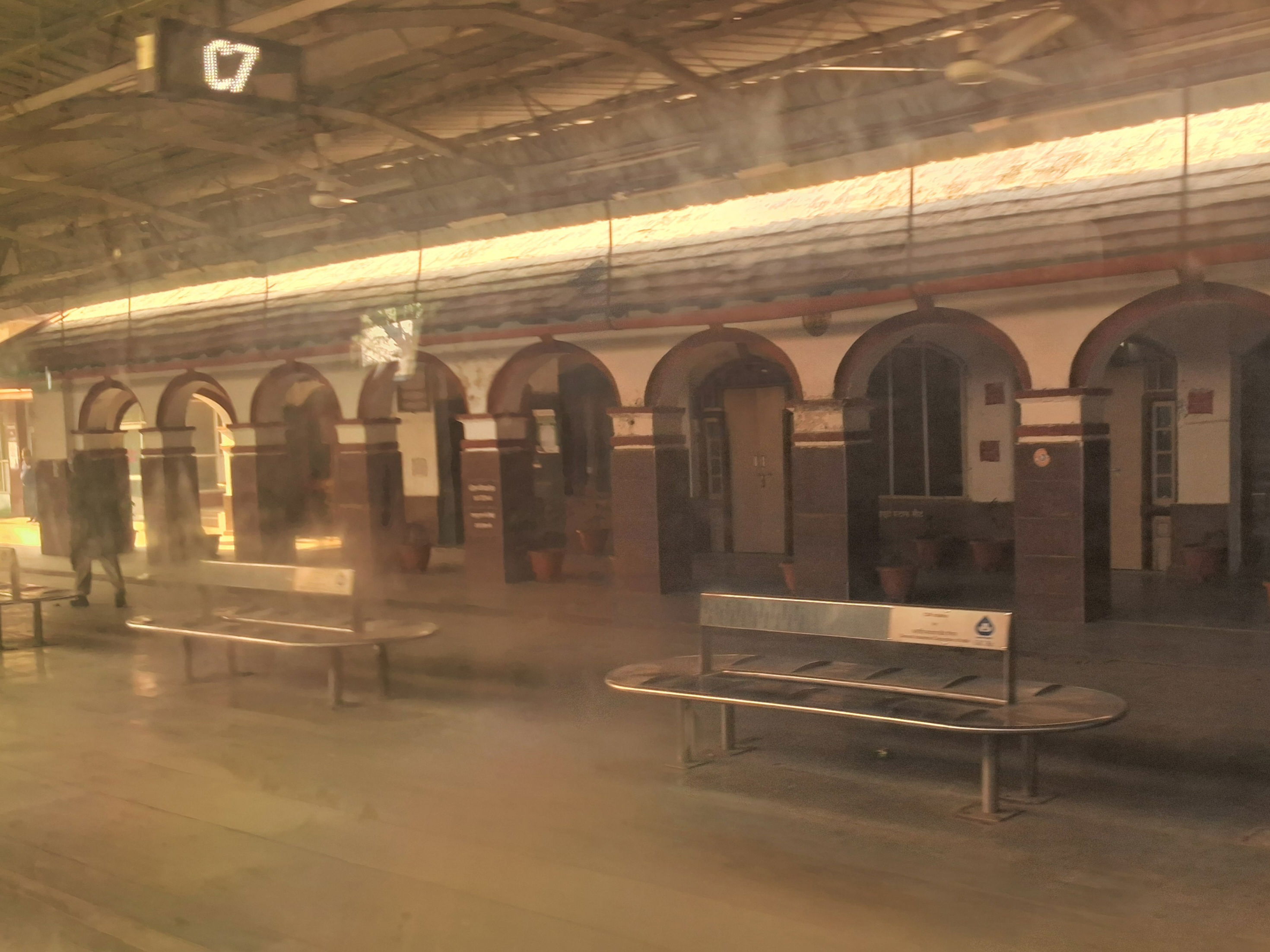
After four hours of travel, the Shivalik mountain range appeared, gently announcing my arrival in Kalka. I’ve always been fond of mountains, so I recognised the place instantly
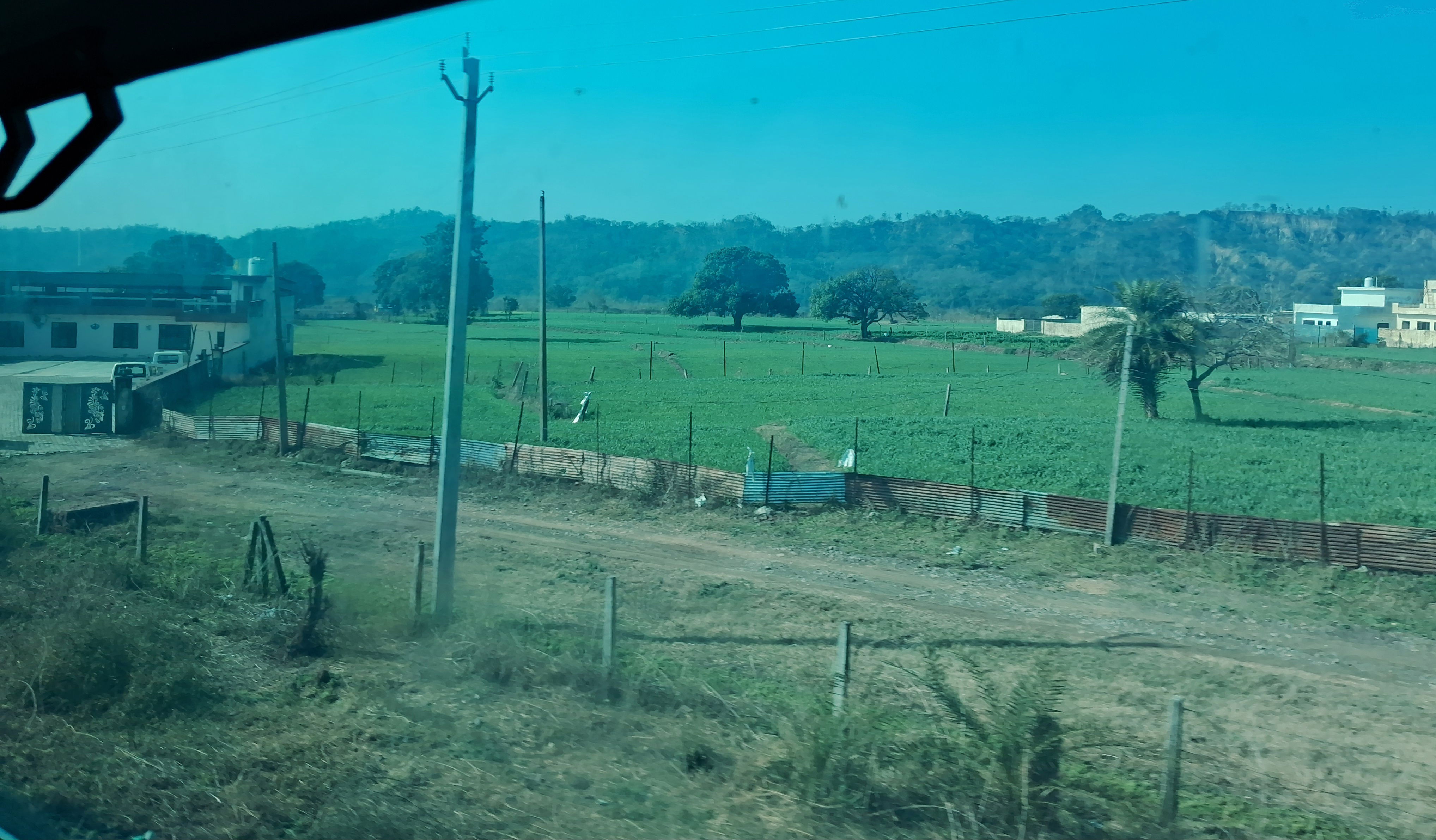
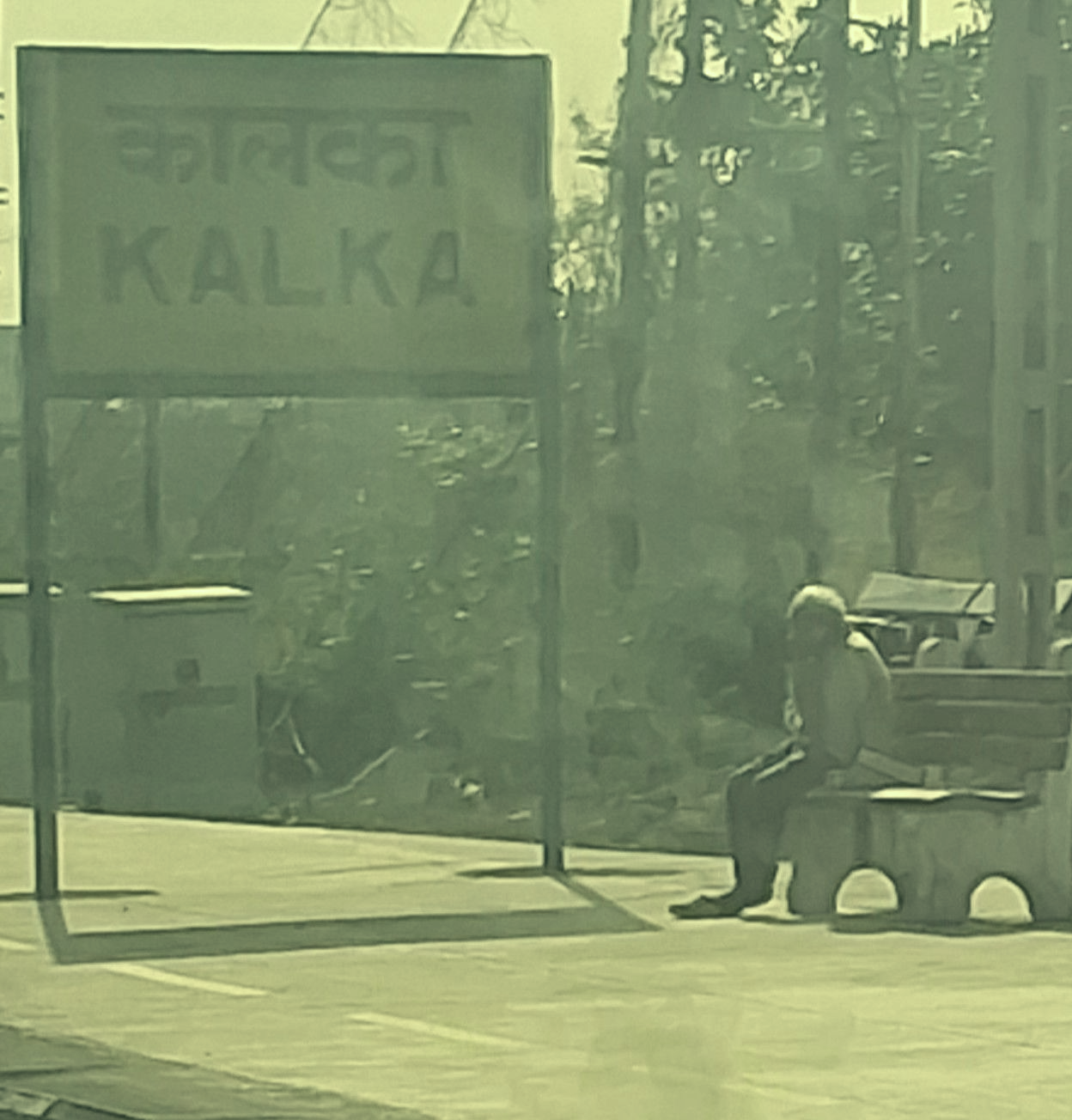
At 11:40 a.m., I deboarded the train at Kalka station. The station was clean, well maintained, and surprisingly beautiful.
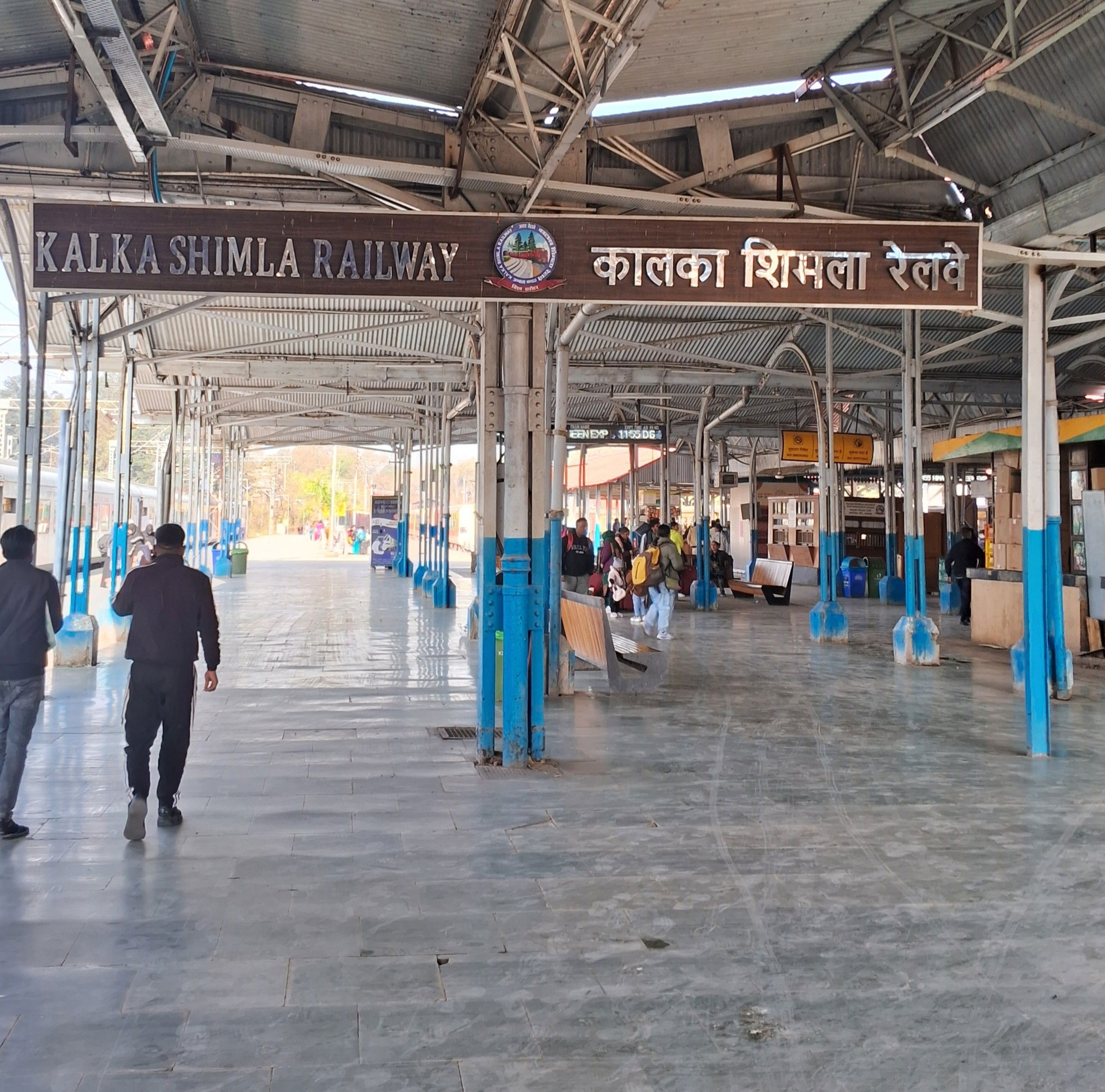
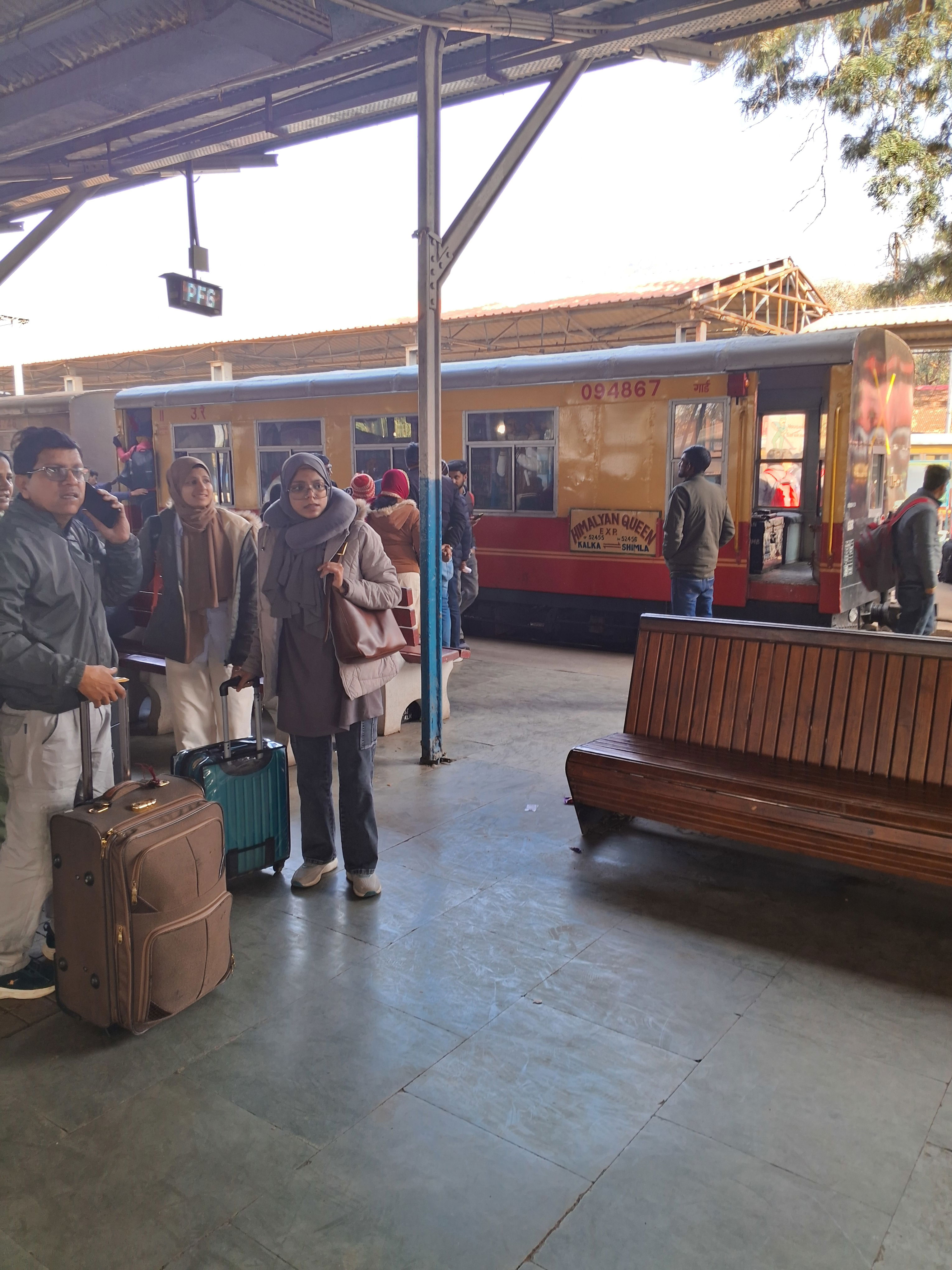
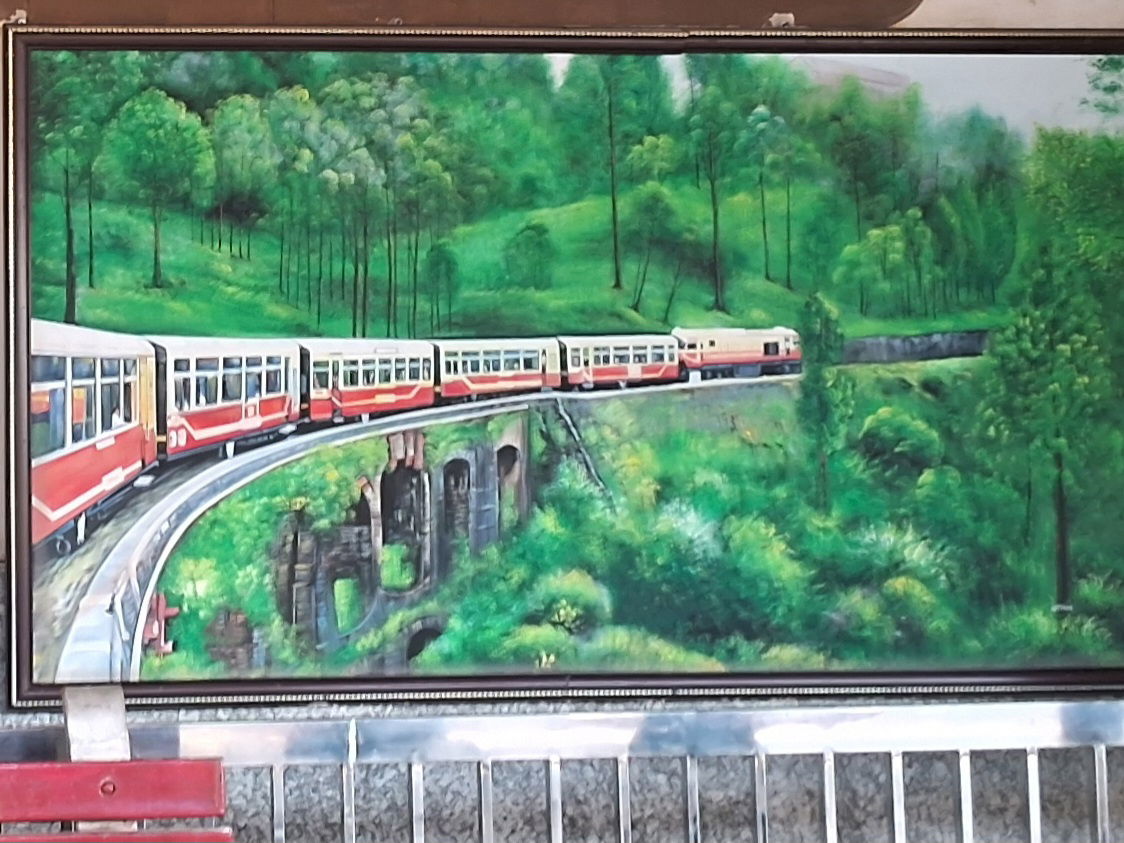
I even got the chance to see the Kalka–Shimla toy train in person.
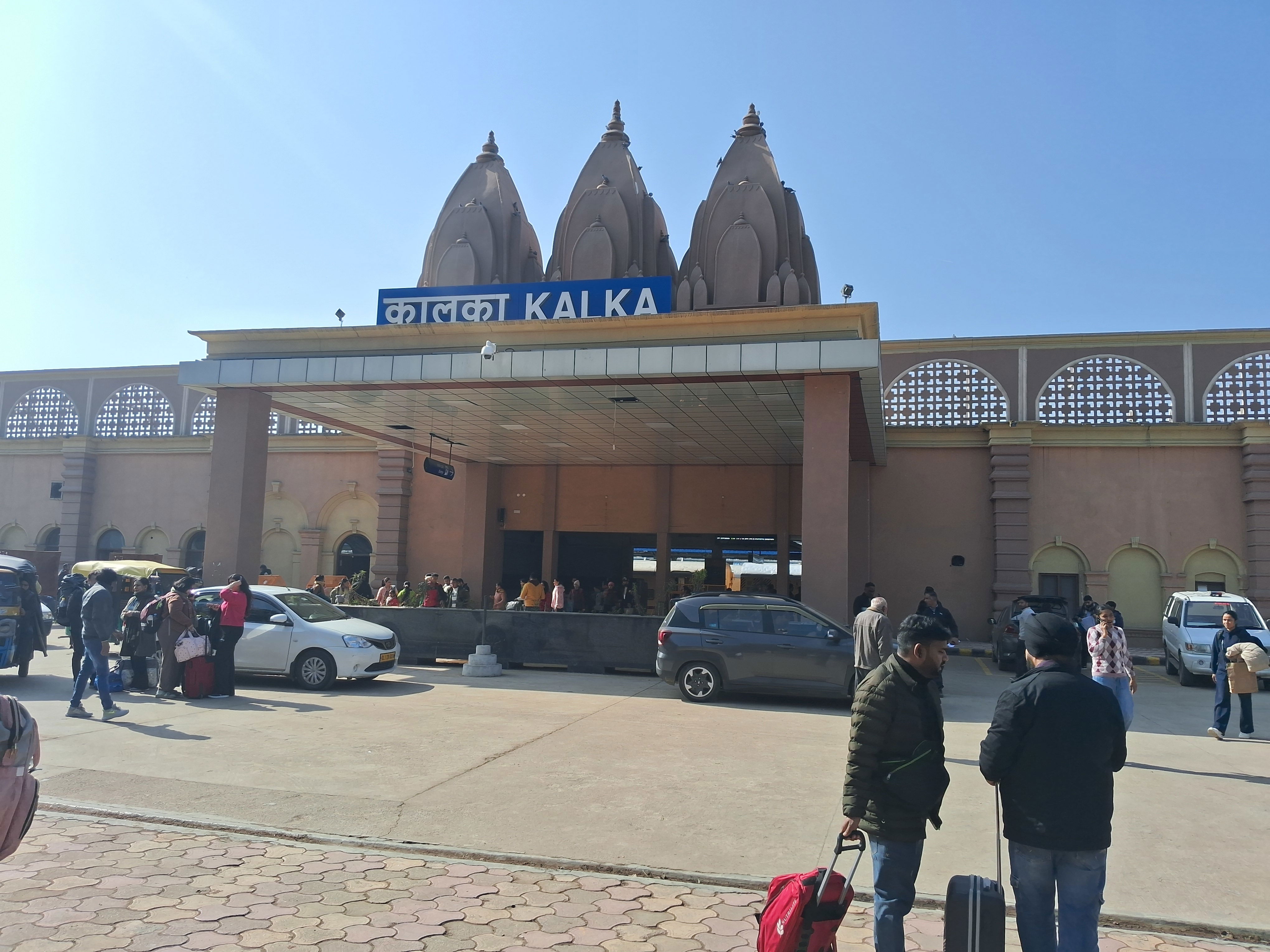
I then stepped out of the station. The exterior was designed like a temple façade, giving the whole place a divine and serene appearance.
I began asking the auto and taxi drivers about the route to Kalka Mata Mandir. I eventually hired an auto for ₹100, which felt a bit high for such a short distance. But since the auto had to climb a hillock, perhaps that explained the higher fare.
The auto drove me through the busy streets of Kalka bazaar, bustling with people and lined with shops selling shoes, clothes, puja items, food and much more. The auto dropped me right in front of my destination—Kalka Mata Mandir around 12:15 pm.
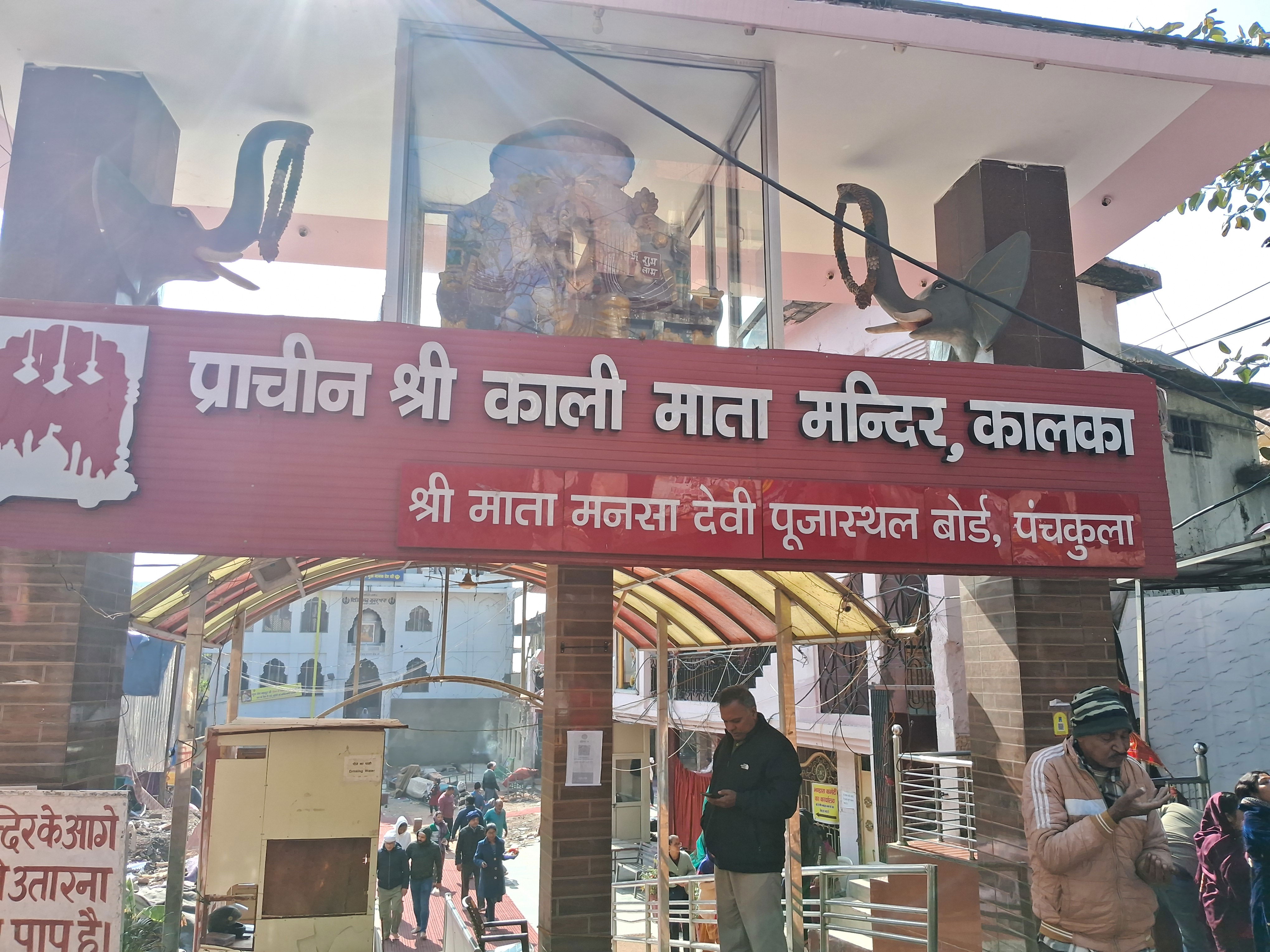
Prachin Shree Kali Mata Mandir, Kalka
This is one of the most revered temples in Kalka (Panchkula district), Haryana, India.
Ma Kaali is worshiped here as a powerful form of the Divine Mother.
It is regarded as one of the oldest shrines in the Panchkula area and a key pilgrimage spot in northern India, and the town of Kalka itself is said to be named after this temple
The temple attracts devotees year-round, with especially large crowds during Navratri (spring & autumn).
The temple is part of the group of shrines managed under the Shri Mata Mansa Devi Shrine Board, and devotees can also participate in online booking for ritual offerings (e.g., chola).
Though the entrance was beautiful, construction work was going on inside, and the temple itself was quite small. I found myself wishing that someday it would grow into a larger and even more beautiful shrine. Behind the temple stood the mighty Shivalik range, and atop one of the hills, the Chandi Devi temple was clearly visible.
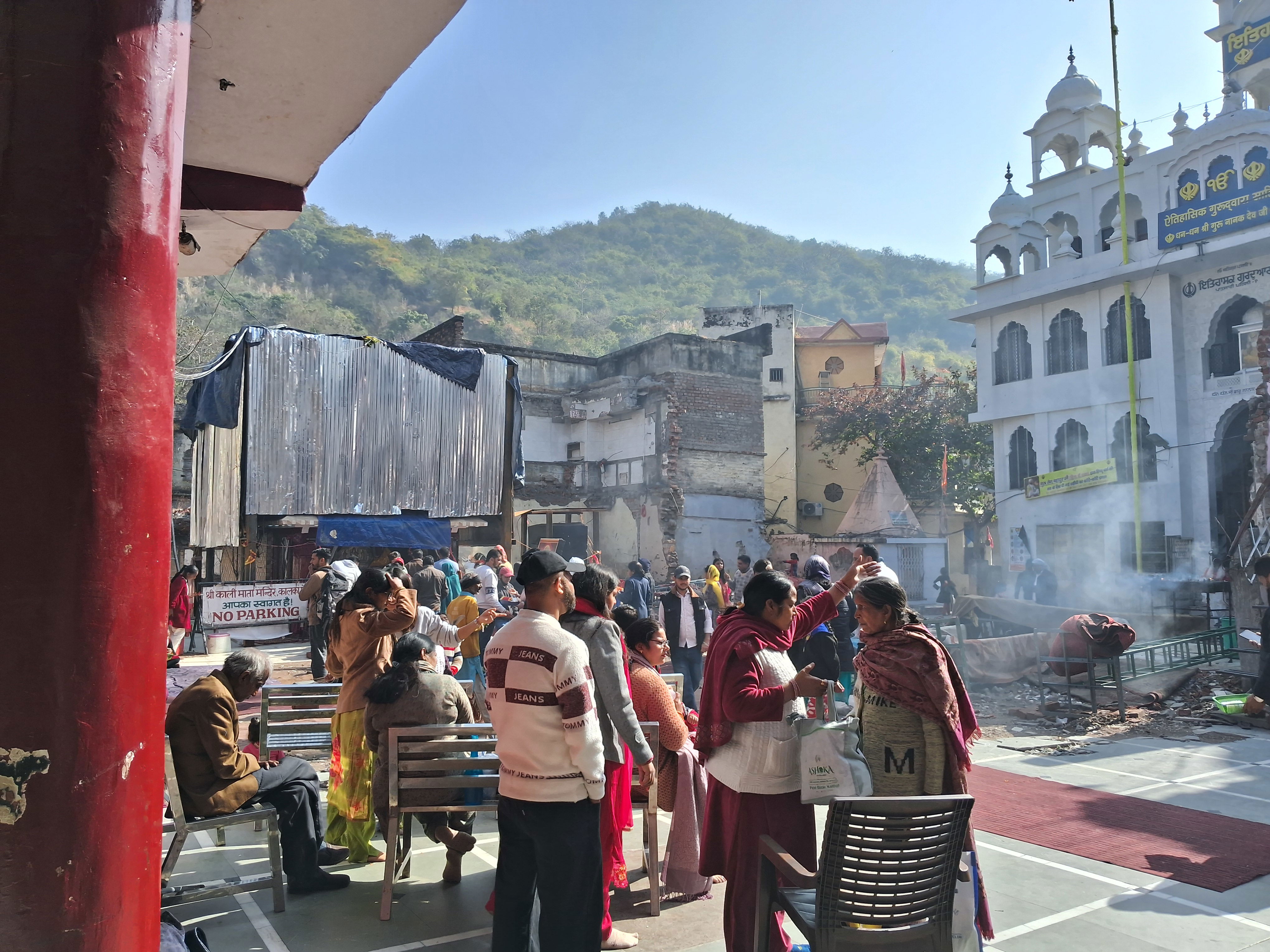
Gurudwara Pehli Patshahi
One unique aspect of this temple is that the compound also has a Gurudwara. Gurudwara located inside the premises of Prachin Shree Kali Mata Mandir
The presence of this Gurudwara within or adjacent to the Hindu temple complex is unusual and underscores a pluralistic cultural heritage, where devotees from different faiths recognize and respect places associated with spiritual figures from multiple traditions.
- According to local tradition inscribed at the site, Guru Nanak Dev Ji, the first Sikh Guru (1469–1539), visited this location around the year 1574 AD on an Amavasya (new moon) day. During his visit, he is said to have preached about unity, peace, and brotherhood to local residents before departing for Pinjore.
- The gurudwara marks the very spot where Guru Nanak is believed to have halted and shared his teachings during his travels (udasi) across the region — a practice that the Guru undertook to disseminate Sikh spiritual principles throughout the Indian subcontinent.
- Locals and regular visitors note that many people who come for darshan at Kali Mata Mandir also visit this gurudwara, reflecting inter-community respect and shared reverence for the site’s spiritual history.
I paid my homage to Ma Kaali, received prasad, and then stepped into the Gurudwara to offer my respects there as well. I asked the sevadaar about kada prasad; he smiled and told me that it is served only in the morning and evening.
Ma ka Bhandara
I stepped outside and looked for the bhandara hall. Since it was Sunday—and I had read that bhandara is usually served on weekends—I hoped I might be in luck. And I was. I received prasad and was fortunate to partake in the bhandara as well.
After finishing the prasad and stepping out of the bhandara hall, I decided to split my donation into two parts—one for the bhandara and another for the construction of the dharmshala. I received receipts for both contributions.
As I was leaving the temple, I was pleasantly surprised to see kada prasad being distributed at the gate. I received my share with a deep sense of gratitude.
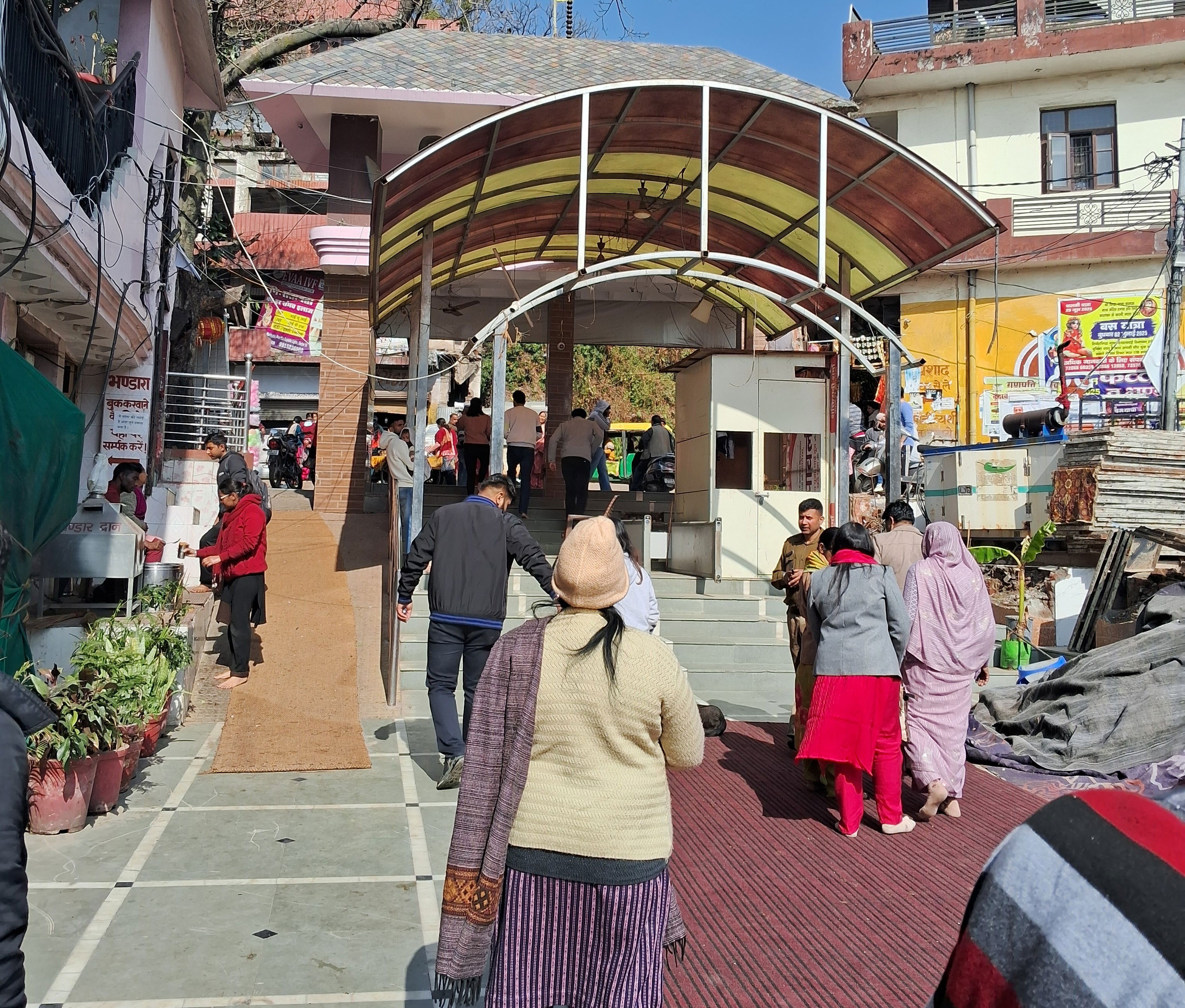
Outside the gate, I was surrounded by several beggars, which is quite common in India. I offered a small amount of money to most of them.
I then visited another nearby temple dedicated to Lord Satyanarayan, an incarnation of Lord Vishnu.
I wanted to buy a photo of Ma Kaali from Kalka, so I began looking for a shop and soon found one. I bought a modest‑sized framed picture for just ₹40, which I have now placed in my puja ghar in Delhi.
Mythological Origins
Traditions and oral histories associate the temple with events from ancient Hindu lore:
- Divine Battle and Manifestation: In the Satya Yuga (an age in Hindu cosmology), demons such as Mahishasur, Chand-Munda, Shumbha–Nishumbha and other powerful asuras created turmoil. The gods appealed to the Divine Mother (Adishakti), who manifested as Kali — the fierce aspect of the Goddess — to destroy these evil forces. After the battle, the goddess is said to have remained in this region as Kali Mata, giving the site its sanctity and name.
- Pandavas and the Temple Site: Local legend links the temple to the Mahabharata era. When the Pandavas were in exile (Vanvas and Agyatvas), they are believed to have stayed in this area. At that time, a cow named Shyama is said to have offered milk daily to a sacred stone (pindi) here. Struck by this divine occurrence, the Pandavas are traditionally credited with establishing the temple at the site.
- The shrine is often viewed as a “Manokamna Siddha Peetha” — a place where devotees’ heartfelt wishes are fulfilled through the goddess’s blessing. This terminology reflects its siddha (efficacious) reputation in regional devotional practice.
- Over centuries, the temple has remained a living center of worship, especially marked by annual festivals such as Navratri, which draw large crowds and community participation — a testament to its sustained religious role in the region.
How to Reach
- By Train: Kalka Railway Station is only ~1 km away by road.
- By Road: Easily accessible from Kalka Bus Stand (~2 km).
- By Air: Chandigarh International Airport is about 42 km by road.
Yadavindra Gardens / Pinjore Gardens
I then decided to visit Yadavindra Gardens to spend a few leisurely hours before catching my evening train.
I hired a shared auto for just ₹30. It took nearly 20 minutes to reach the gardens, the ride turning quite bumpy at times because the road wasn’t well maintained.
I kept chatting with the auto driver to learn more about the place. He corrected me, saying that the bhandara at the temple is actually served every day, not just on Sundays as mentioned on the internet.
He told me that the route to Pinjore Gardens had two stretches where traffic jams were common, and that an evening weekly market was also scheduled to begin later that day. Hearing this made me a bit anxious, as I had originally planned to spend two to three hours in the garden. After learning the situation, I decided to limit my visit to just one hour.
Yadavindra Gardens
Auto dropped me right in front of the gate around 2:10 pm. I asked the auto driver from where to buy the tickets and he showed me the right direction. I payed him Rs.30 and thanked him.
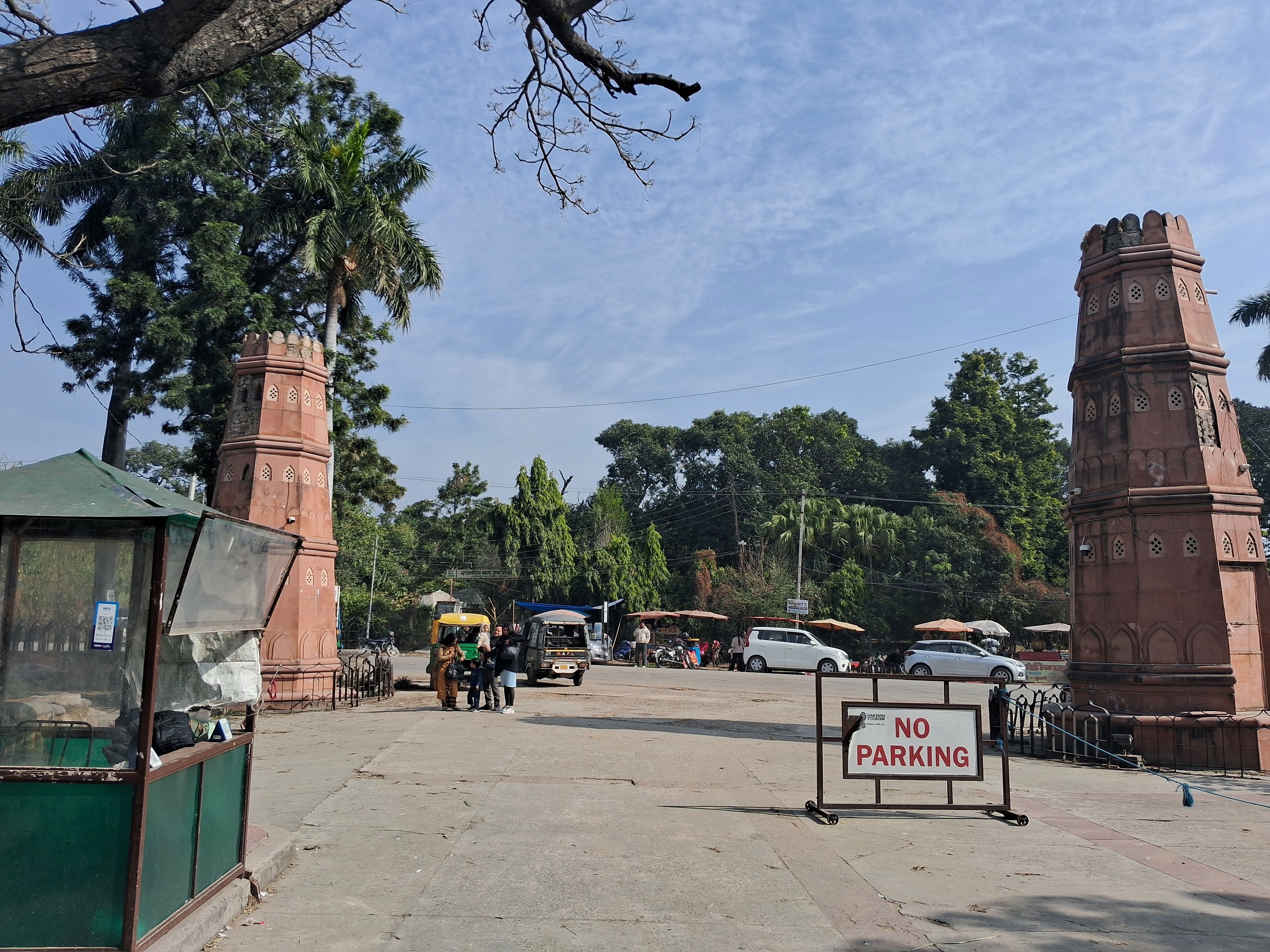
Outside the gate, a mini toy train was entertaining both children and adults alike. There were some shops nearby to serve the tourists.
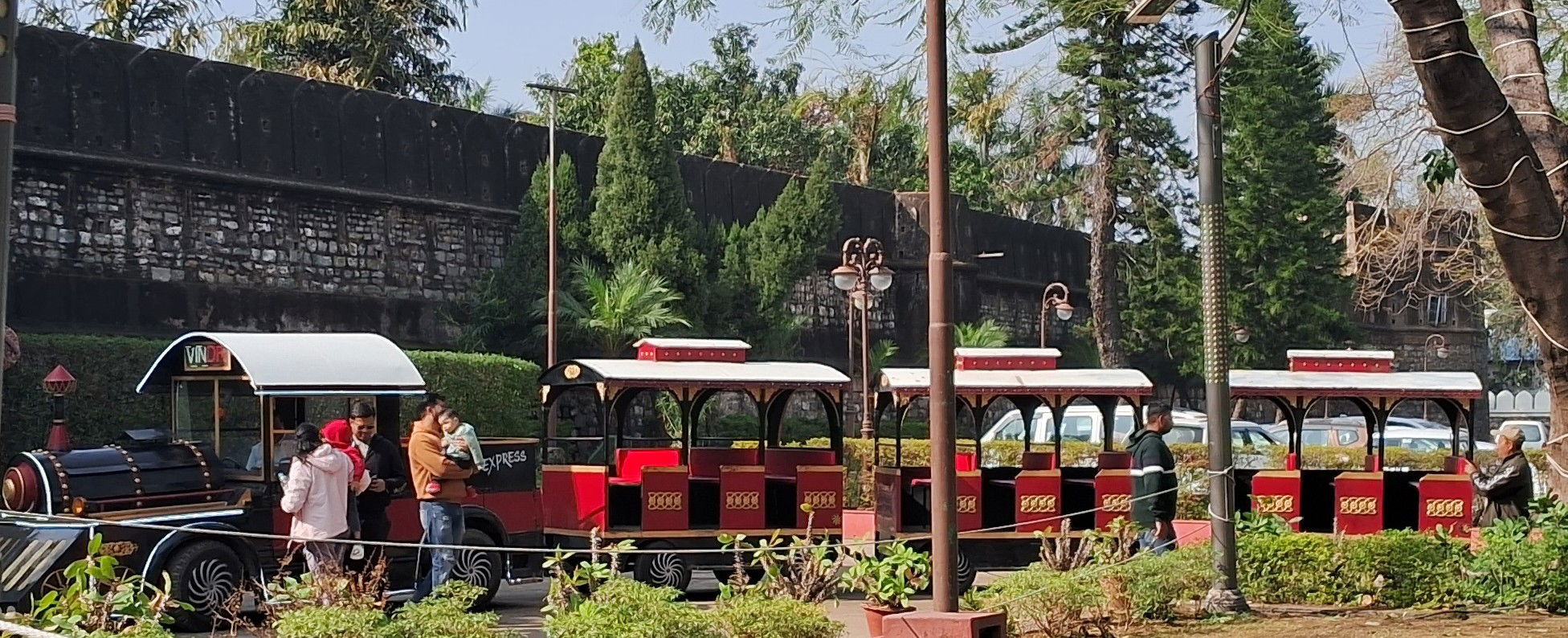
From outside, I found Yadavindra Gardens more fascinating than the picture I saw on internet. I got a feeling that this place was indeed made by Kings and royals and I was not wrong.
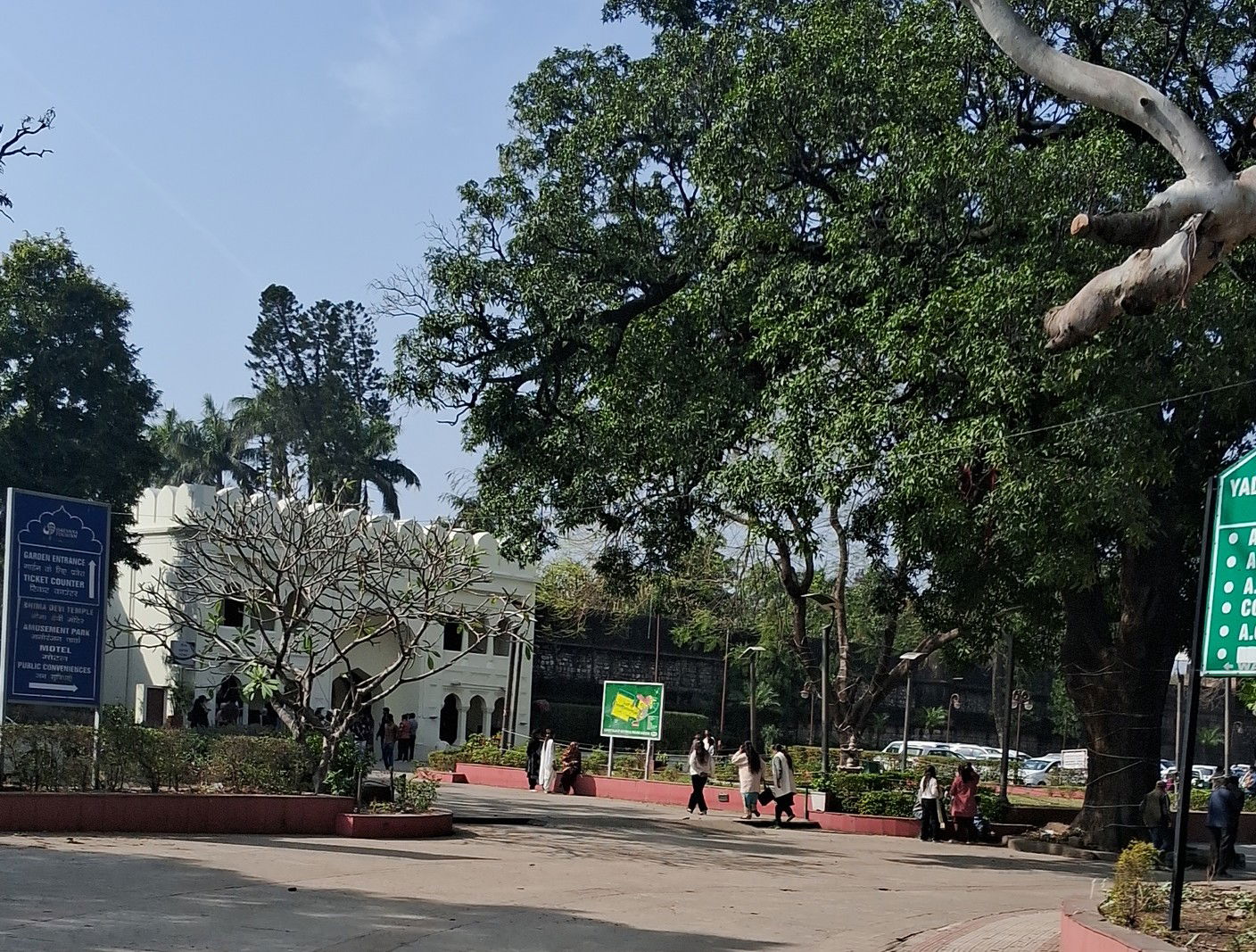
History of Yadavindra Gardens (Pinjore Gardens)
Yadavindra Gardens is a 17th-century historic Mughal garden situated in the foothills of the Shivalik range, near Pinjore city. It exemplifies the Mughal Garden style — formal, geometric, and water-centred — and has layers of historical phases shaped by empires and regional rulers.
Origins under the Mughals
- The garden was **commissioned in the early 1600s by Nawab Fidai Khan Koka, a foster brother and close associate of Emperor Aurangzeb (r. 1658–1707). Fidai Khan was an accomplished architect and administrator under the Mughal regime.
- Designed following the Mughal charbagh (four-part) principle, it used terraces to adapt to the sloping terrain and incorporated water channels and fountains to create a structured, scenic landscape.
- Built as a summer retreat and pleasure garden in the cooler foothills, it mirrored larger Mughal garden traditions seen in places like Shalimar Bagh in Kashmir.
Revival by Patiala Royals and Naming
- In 1775, the garden came under the control of the Raja of Sirmur, and later it was acquired by the Maharajas of Patiala.
- The most prominent restoration occurred under **Maharaja Yadavindra Singh of Patiala (1914–1974), who revitalised the garden and restored its architectural elements and horticulture.
- In recognition of his contributions, the complex was renamed Yadavindra Gardens.
After the reorganisation of states in 1966, when Haryana became a separate state, the garden was maintained and developed further as a public heritage site under the state tourism department.
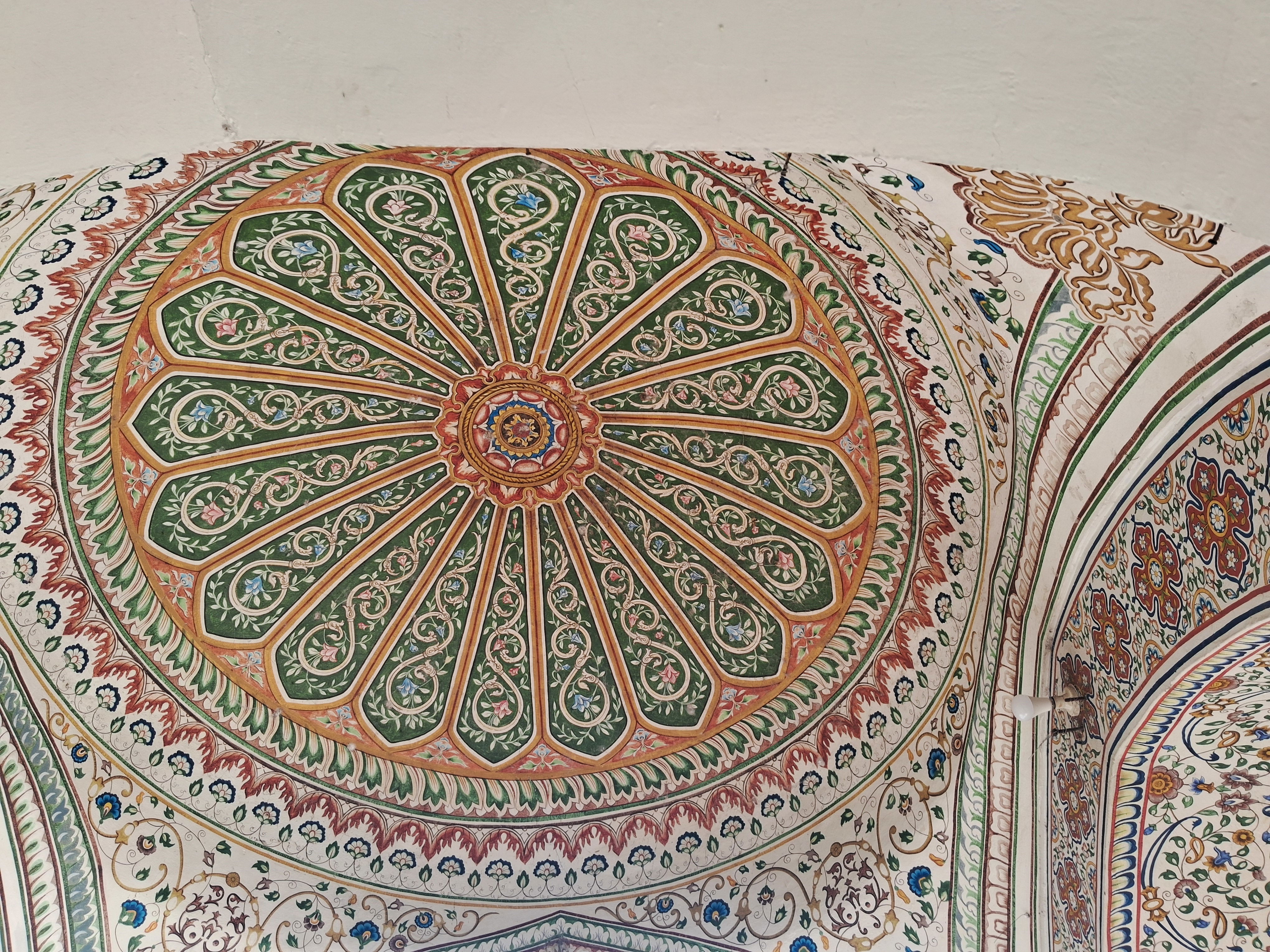
I bought a ₹25 ticket and entered the garden. On the roof of the entrance, I found some beautiful art work done by the creators.
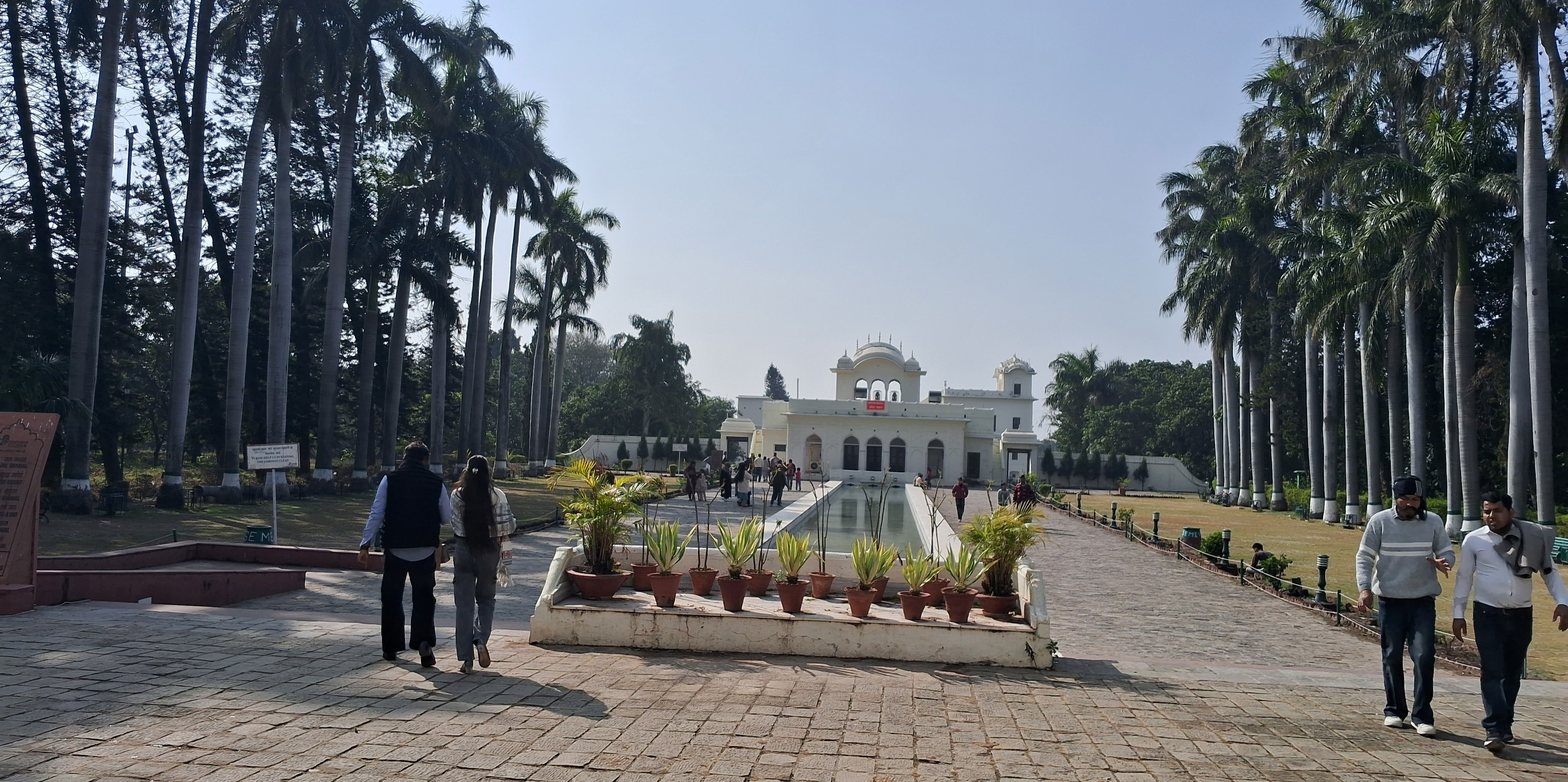
The very first view inside the garden left me speechless—a vast, beautiful expanse with grand Mughal‑style architecture, flowing fountains, vibrant flowers, and an array of trees spread across the landscape.
There I came across a professional photographer. I paid him ₹100 for a photo, and he provided me with both a hard copy and a soft copy.
What’s Inside the Gardens
The garden spans roughly 100 acres across seven terraces, each offering distinct architectural features, plantings, and visitor experiences.
Terraces & Historic Structures
- First Terrace – Sheesh Mahal (Palace of Mirrors):
A Rajasthani-Mughal style palace near the entrance; originally a royal pavilion. - Hawa Mahal:
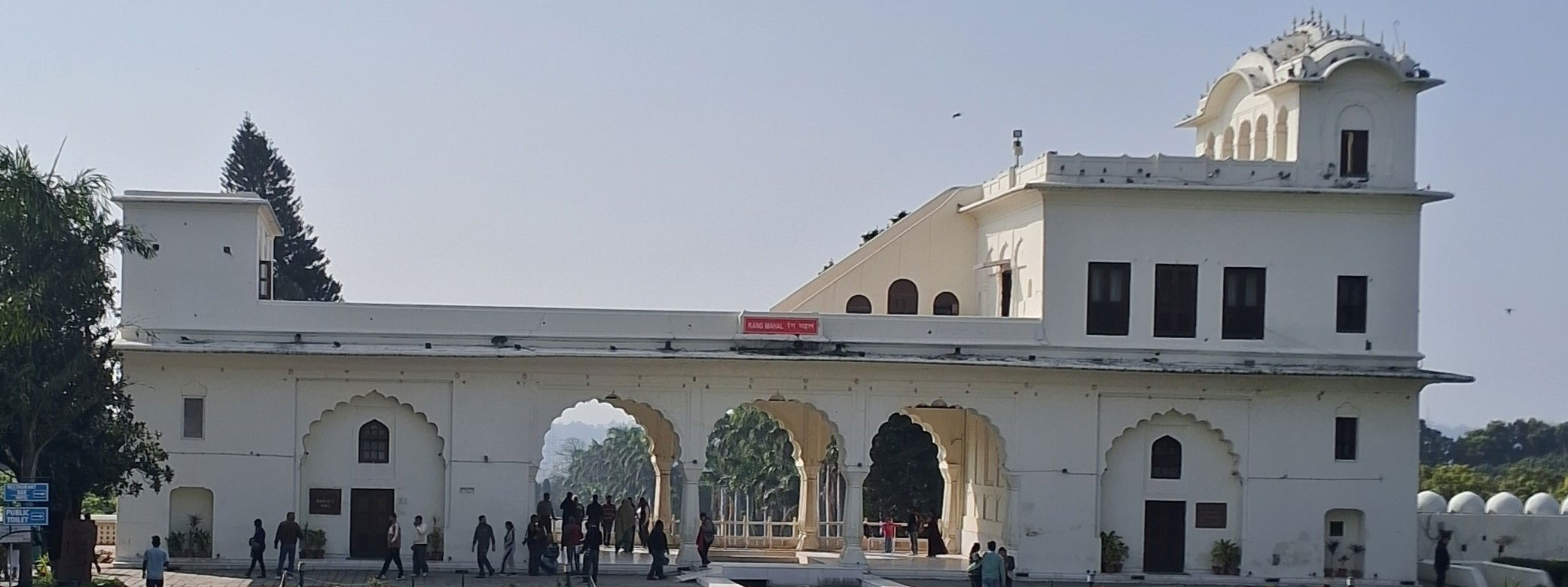
An adjacent airy palace designed to catch breezes, offering cool spaces. - Second Terrace – Rang Mahal (Painted Palace):
Decorated residence once used for imperial leisure activities. - Third Terrace:
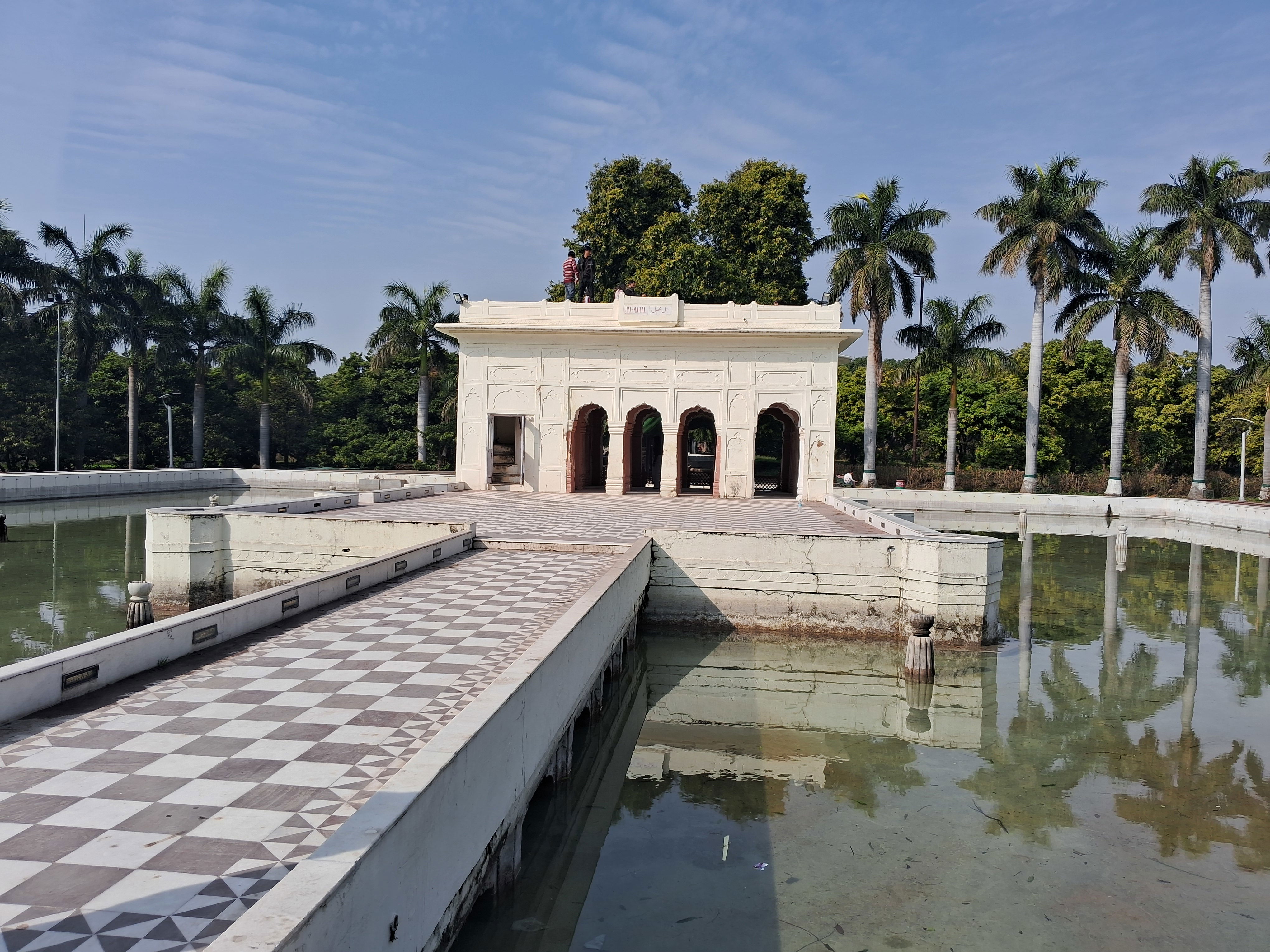
Cypress trees, flowering beds, and fruit groves lead through scenic shaded walks. - Fourth Terrace – Jal Mahal (Palace of Water):
A water pavilion with a square fountain bed — considered one of the most serene spots in the garden. - Fifth Terrace:
Tree groves and pathways flanking water channels and fountains. - Lowest Terrace – Open-Air Theatre:
A disc-shaped outdoor performance space, historically used for cultural events and now for modern shows.
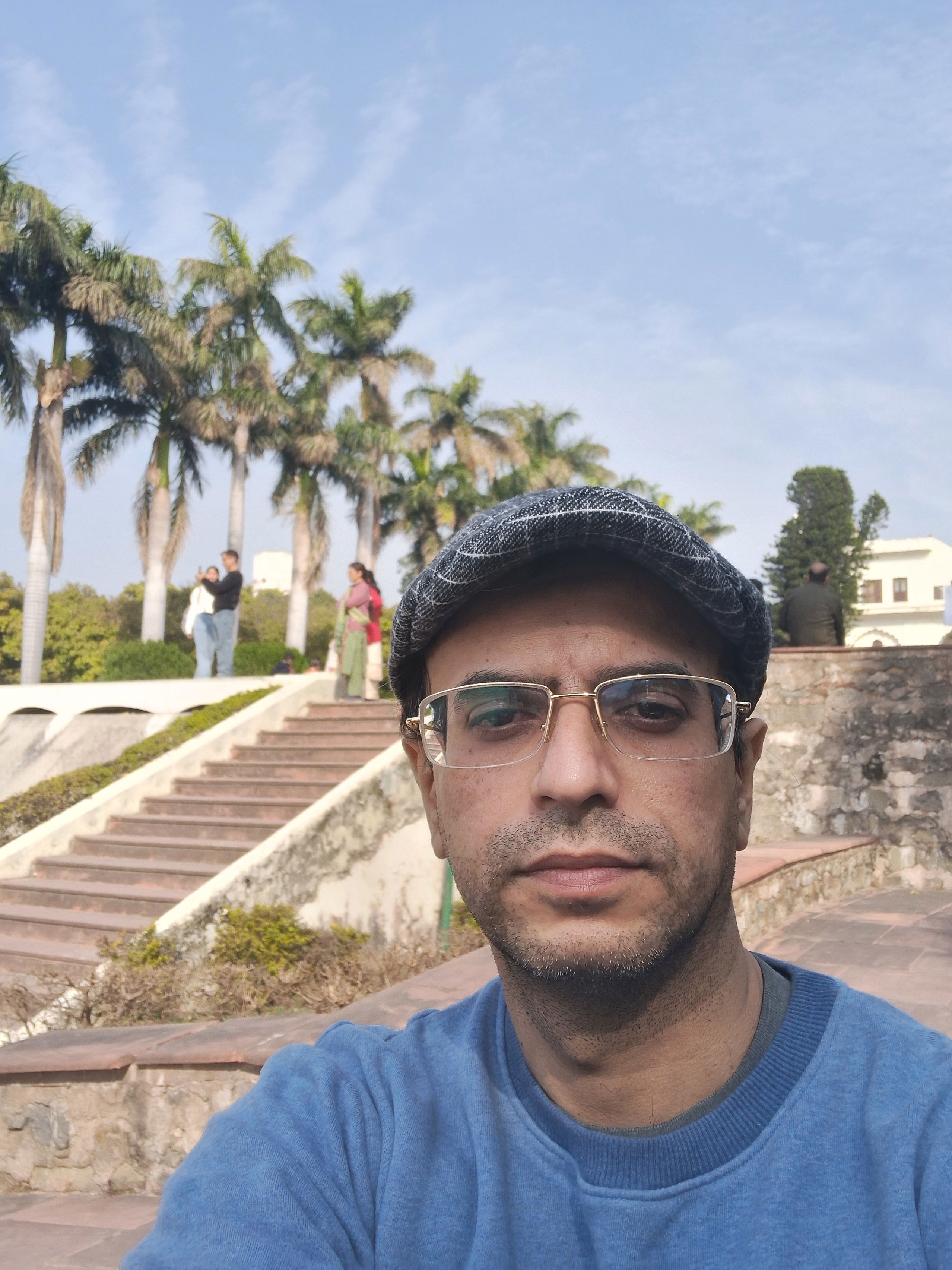
I wandered through the entire garden, taking in its beauty, and then sat for about an hour, simply enjoying the peaceful surroundings.
Families kept arriving with their little children, filling the garden with laughter and making the place feel even more alive. The kids ran around with the effortless joy that only childhood carries. Watching them reminded me of my own early years—those carefree days when I was just as playful, and my family found the same happiness in seeing me enjoy the world.
After a while, I walked over to the food court to get a beverage, but the exorbitant prices made me decide against spending money there. I felt like having a glass of lassi, but when I asked the price and was told it was ₹160, I was genuinely surprised—I had never heard of lassi being sold at such a high rate.
I then began to head out, still mindful of the evening traffic. Outside, I treated myself to an ice cream—even in January. It didn’t feel odd at all; the sun was out, and the crisp winter weather made it a perfect day for sightseeing.
In the parking area, I noticed a group of 15–20 bikers gearing up for what seemed to be a bike rally.
This time, I hired an auto that was completely empty. The driver, a polite man in his fifties, made a simple offer: if he didn’t find any other passengers along the way, he would charge me ₹150, but if he managed to pick up even one person, he would take only ₹30. I was genuinely impressed by his honesty and simplicity. I smiled and agreed.
Soon his auto filled up with passengers, so I ended up paying only ₹30. He dropped me at a point from where the railway station was just a short walk away. I thanked him and began walking towards the station.
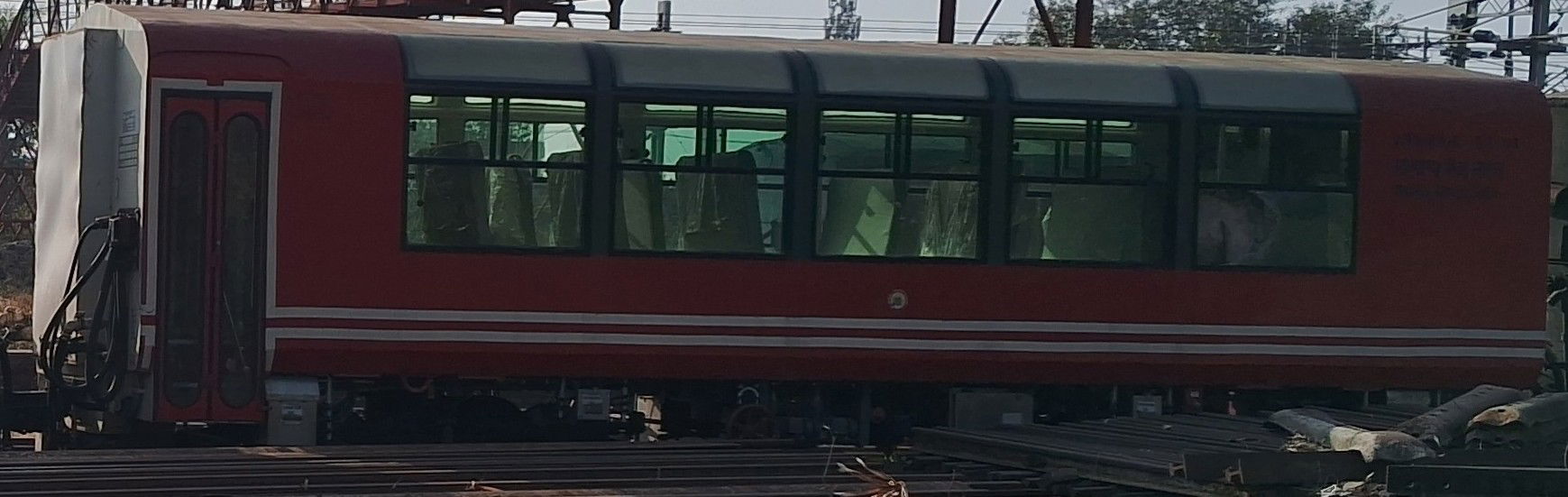
The road was well maintained, with a few roadside hotels on my right. On the left ran the railway track towards New Delhi, where several unusual railway coaches were parked, types one doesn’t get to see very often. I paused for a moment and took a few pictures of them.
I reached the railway station around 3:15 pm. My first stop was the railway lounge, but it was under renovation. So I went to get a samosa instead, only to find it being served on a piece of newspaper rather than a paper plate. After this rather unexpected welcome, I decided to head out and look for my coach.
The Kalka Shatabdi Express, which had brought me there at 11:40 am, was still parked on the same platform. I began searching for my coach, E2—the first‑class AC compartment—which happened to be the very first coach of the train.
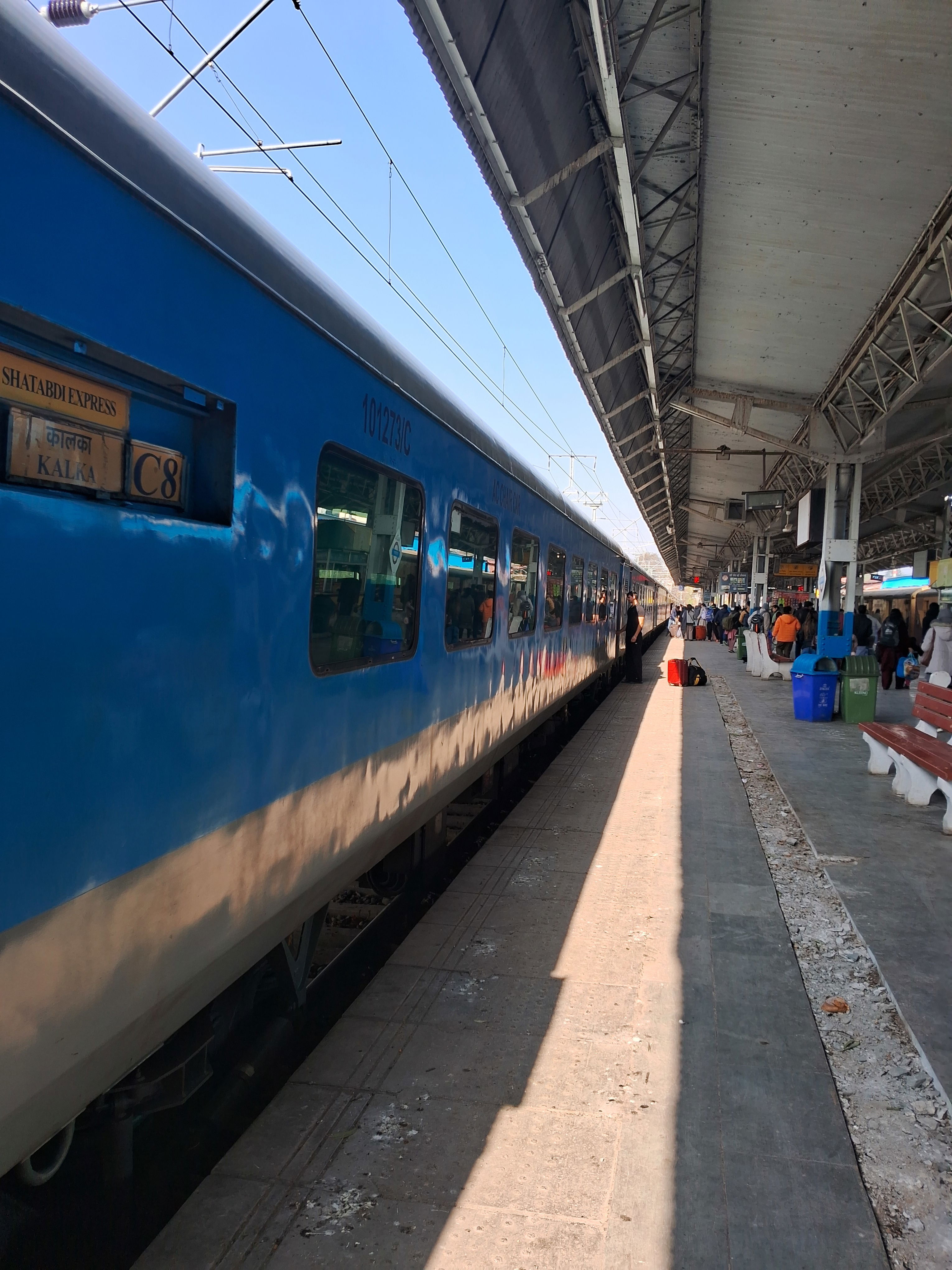
I decided to have a cup of tea, and even that turned into a funny little memory. Just as the trolley vendor began preparing it, another vendor from a nearby railway stall came rushing over and started scolding him. The two were clearly tea rivals, and I couldn’t help but smile at their unexpected showdown.
After being scolded so much, the trolley vendor gave up on preparing the tea and directed me to the stall vendor instead. The stall owner, while making my tea, shared his political frustrations with various parties, and eventually handed me a cup of tea for ₹10.
I found it a bit odd that the Shatabdi Express didn’t run for the rest of the day after 11:40 am. The limited number of trains was causing inconvenience not only to passengers but also to vendors, taxi and auto drivers, and coolies in this tourist and pilgrimage town. I hope things improve in the future for everyone’s benefit.
While standing at the tea stall, I met two youngsters—perhaps siblings—in their twenties. They were buying cup noodles. The young man struck up a conversation, and within minutes we discovered that we both came from the corporate world: he worked in HR and Training, while I was from Operations and Training.
After a deep conversation about work and professional life, he mentioned that they were returning from Shimla. They had visited the Jakhu Temple, perched atop the famous Jakhu Hill.
He told me how the two of them had gotten stuck in nearly two feet of snow after their evening visit. Darkness had fallen, the electricity had gone out, and with a deep gorge on one side and a snow‑covered road ahead, the situation had become genuinely risky.
I felt they had chosen the wrong season for a pilgrimage to a snow‑covered mountain. The best time to visit such places is usually between March and June or from September to November.
They were also eating cup noodles. Most Maggi and similar noodles contain onion and garlic, which are generally avoided during pilgrimage or worship. Being a religious‑minded person, I try to stay cautious about such things myself.
Jakhu Temple
Jakhu temple is an ancient Hindu temple dedicated to Lord Hanuman perched atop Jakhu Hill — the highest point in Shimla.
Connection to the Ramayana
- The temple’s legendary origin is linked to the epic Ramayana. According to tradition, Lord Hanuman passed over this hill while searching for the Sanjeevani herb needed to save Lakshmana, who had been gravely wounded in the battle against Ravana. During this journey, Hanuman is said to have descended and rested at this spot — making it sacred to devotees because of this association with his devotion and strength.
- Some local narratives add that the place is named after a sage called Yaaku (Yaksha Rishi) who meditated here, further embedding the site in early Hindu lore.
After chatting for more than half an hour, the two siblings boarded their train. Their train was parked right in front of us on Platform No. 2 and departed before mine. But later, I discovered that both trains reached New Delhi Railway Station at the same time.
As the evening air grew colder, I decided to board my train a good half hour early to escape the chilly wind.
It was my first time travelling in the First Class AC compartment, also known as the Executive Class. Since moving to Delhi in 1992, I had only travelled outside the city three times before—and none of those journeys had been in this coach.
Once inside the coach, I hung my bag on the hook above the window and settled into my seat
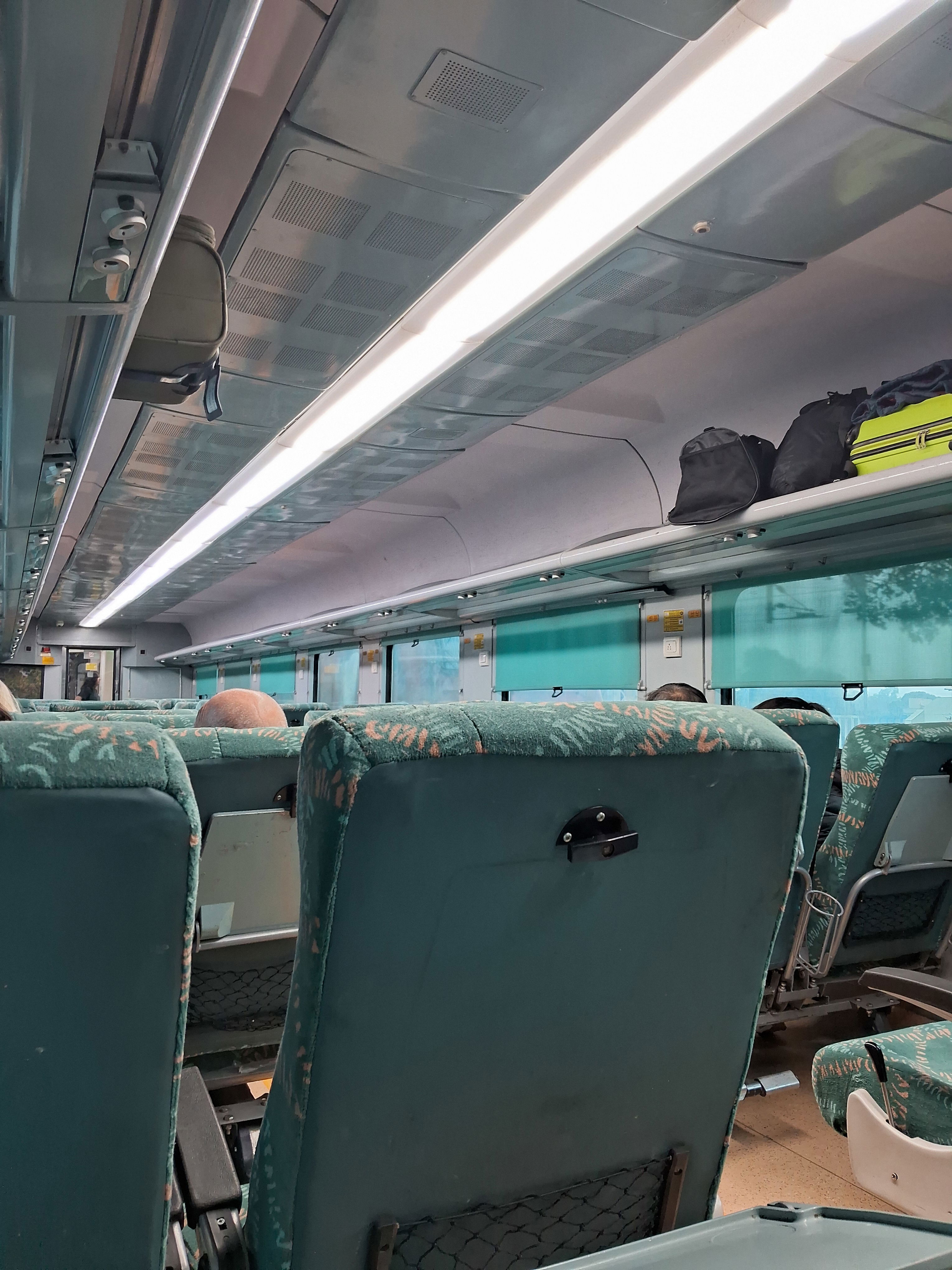
Soon, a family who seemed to be frequent travellers on this train began behaving as if everything naturally belonged to them.
A little later, the father approached me and asked if I could change my seat so their family could sit together.
I prefer booking a window seat when I travel alone. It keeps me connected to the world outside and makes long journeys feel easier and more engaging. I glanced at the seat they were offering me. It had no window—just the blank wall of the coach. I politely declined their request.
The family had three well‑educated, English‑speaking youngsters, and after a while they began behaving a bit playfully, almost in a way that felt out of place for the quiet Executive Class coach.
They began making indirect comments about me. Soon after, they started playing cards, switching seats, even jumping around on the seats. The Executive Class slowly began to feel more like a sleeper coach.
Right in front of them sat an elderly foreign couple. I couldn’t quite tell what they were feeling as they watched all this unfold.
While I was having my dinner, the girl suddenly jumped on her seat while playing cards. My hot meal, placed on the tray attached to the back of her seat, shook dangerously—but thankfully didn’t spill onto my clothes. In that moment, I silently thanked Kalka Mata.
And that is how my journey in the Executive Coach—the First Class AC—began and unfolded, filled with unexpected encounters, small challenges, and quiet moments of gratitude.
In this Executive Class coach, I found most things to be just as I had read about on the internet.
The Executive Class coach has two seats on each side, whereas the AC Chair Car (CC) coach has a 3×2 seating arrangement—three seats on one side and two on the other.
The seats in the Executive Class coach had built‑in neck supports, a feature missing in the CC coach.
The seats felt broader, thanks to the smaller number of chairs in the coach.
In the Executive Class, meals are served in bone‑China crockery, whereas in the CC coach they come in plastic containers.
The staff came around distributing the evening newspaper, followed by a bottle of water for each passenger. Tea was served in a bone‑China cup, accompanied by biscuits, vegetable cutlets, a small piece of patisa, and a handful of roasted almonds.
The menu in the Executive Class was far superior to that of the CC coach. First, I was served tea and biscuits in a bone‑china cup. Later, hot tomato soup arrived in a matching bone‑china bowl with a proper soup spoon, accompanied by two crisp soup sticks and a portion of butter.
The main meal arrived around 8 p.m. It was served on a plastic tray rather than a regular plate, which was a bit different from what I had expected. Still, the quantity was more than sufficient for one person. The dinner included two paranthas, rice, matar paneer, dal, a dry vegetable, and curd. To finish, I was served a cup of butterscotch ice cream.
I was on a pilgrimage and, being a vegetarian, I had wondered earlier about who might sit beside me. My adjacent seat remained empty until Sonipat, when a gentleman boarded and settled in. He ordered non‑vegetarian food. I had anticipated this possibility before the journey, and there was nothing to be done about it. So, I simply turned towards the window and let my gaze rest on the passing scenery while he finished his meal in peace.
Around 9:50 p.m., the train rolled into Platform No. 1 at New Delhi Railway Station. I had already booked an Uber Rental in advance, and the cab was waiting for me outside. I stepped out of the station, got into the car, and reached home safely.
My Kalka pilgrimage ended on a gentle, satisfying note, leaving me with a deep sense of inner contentment. I offered my thanks to Kalka Mata and to my late mother, whose blessings and inspiration gave me the courage to undertake this first solo train journey—especially one made in devotion.
👉Write in comment section:
- How much did you like the post and what insights do you want to add.
- Share your biggest operational pain point in the comments and if you think that this AI tool is going to solve your problems!
__________________________________________________________
Visit my LinkedIn profile: https://www.linkedin.com/in/specialskillsin
Enroll into any online course of your choice:
https://rajeshpathak.graphy.com/s/store
Disclaimer: This content was prepared with support from an AI‑powered assistant that enhances human creativity to improve clarity, accuracy, and impact. Some visuals in this post were also created with the help of AI to make the ideas clearer and the story more engaging. While I strive for precision, AI tools may occasionally produce errors. Any resemblance to real people or copyrighted works is purely coincidental. Please use this content for informational purposes only.